
Choosing a pop-up canopy or screen shelter for camp
How to choose and use shade and bug shelters at a campsite: pop-up canopies, screen rooms and tarps, sizes and frames, sidewalls, staking and weighting in wind, fire and stove safety, campground rules, lightning and storage.
By the CampTier team · Updated 2026-10-15 · About 5 min read
Why add a shade or screen shelter
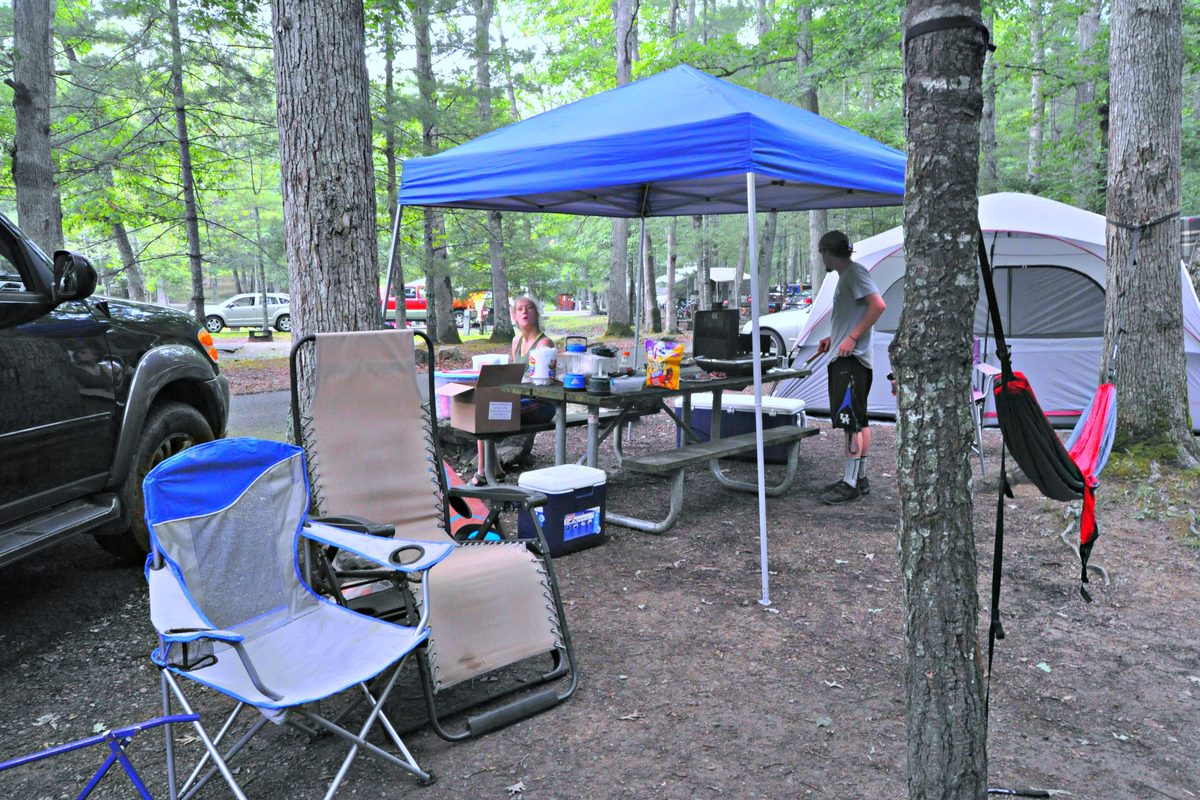
At many campgrounds, the tent is for sleeping and the real living happens around the picnic table. A pop-up canopy or screen shelter turns that table into a comfortable outdoor room. It gives shade on hot afternoons, a dry place to cook and eat in light rain, and, with mesh walls, a break from mosquitoes and biting flies at dusk. For families and groups, a single shelter over the kitchen and seating area often makes more difference to comfort than a bigger tent.
This guide explains the main types of camp shelters, what to look for when choosing one and how to set it up safely. Always follow the maker's instructions, especially for staking and wind limits.
The main types
Pop-up canopies. A folding steel or aluminum frame with a fabric roof that expands accordion-style. They go up quickly with two people, offer straight legs and plenty of headroom, and are common in square sizes. They are heavy and bulky but easy to carry from car to site.
Screen rooms and screen houses. Frames with a roof and mesh walls, sometimes with zippered doors and optional solid wind panels. Some use pop-up hub designs, others use poles like a tent. They are best when bugs are the main problem.
Tarps. A large tarp pitched over the table with poles and guylines is lighter, more packable and very adaptable, but takes more skill to pitch well. See setting up a camp tarp.
Awnings. Vehicle or trailer awnings offer shade next to the car. They need their own care in wind and are outside the scope of this guide.
Choosing size and shape
- Fit the site. Many campsites have limited flat space between trees, the fire ring and the tent pad. Measure your typical site or check campground site descriptions, and remember that guylines extend beyond the footprint.
- Cover the table and the cooks. A shelter that covers the picnic table and a little space around it is usually more useful than one that only covers the table top.
- Think about headroom. Straight-leg canopies give more usable space at the edges than slant-leg designs of the same footprint.
- Check the packed size and weight. Pop-up canopies can be long and heavy. Make sure yours fits the car with everything else.
Frame, fabric and features
- Frame material. Steel frames are usually heavier and sturdy; aluminum frames are lighter. Check joints, feet and locking pins for quality.
- Roof fabric. Look for a coated, water-resistant fabric and taped or well-sewn seams if you want rain protection. Some shade fabrics are not waterproof.
- Venting. A vented roof can reduce how much wind lifts the canopy.
- Sidewalls. Optional sidewalls block low sun, wind and rain from one side. They also turn the canopy into a sail, so use them with care in wind.
- Mesh. For screen rooms, a fine mesh keeps out smaller insects, and solid lower panels can stop splash and drafts.
- Fire labeling. Some shelter fabrics are labeled as meeting a flammability standard such as CPAI-84. That reduces how readily the fabric ignites, but it does not make it fireproof.
Staking, weighting and wind
Wind is the main hazard with pop-up canopies. They are light for their size and catch gusts easily, and an unsecured canopy can lift, tumble and damage gear, vehicles or people.
- Stake every leg with sturdy stakes suited to the ground, and use the guylines provided. Our guide to choosing tent stakes and guylines covers stake types.
- Use weights on hard ground. On gravel pads, rock or pavement where stakes will not hold, use purpose-made leg weights or sandbags.
- Lower the canopy in wind. Many pop-ups can be set at a lower leg height, which reduces lift.
- Take sidewalls down when wind picks up.
- Know when to collapse it. If gusts are building or a storm is coming, take the canopy down or fold it to its lowest position before the wind does it for you. Check the maker's wind guidance.
The same tensioning habits that keep a tent quiet in wind apply here; see pitching a tent in wind and choosing guyline tensioners and knots.
Rain
In rain, pitch the roof with enough slope that water runs off rather than pooling. A sagging pocket of water can bend frames or tear fabric. Push water off from underneath with a gentle hand or a broom handle before it builds up. In heavy rain, angling one side lower helps.
Fire, stoves and heat
Never put a canopy or screen room over a campfire, and keep it well away from sparks. Fabric can melt or burn, and smoke can collect under the roof. If you cook under a canopy with a camp stove, follow the stove maker's guidance on clearances and ventilation, keep the stove on a stable table and keep sidewalls open so fumes can escape. Do not use fuel-burning stoves or heaters inside an enclosed screen room or any enclosed shelter. See carbon monoxide safety with camp stoves and heaters and camp kitchen basics.
Lightning
A canopy or screen room offers no protection from lightning. The National Weather Service advises that no place outside is safe when thunderstorms are in the area, and that open-sided shelters such as picnic shelters do not protect you. When you hear thunder, head to a hard-topped vehicle or an enclosed building. See thunderstorm and lightning safety at camp.
Campground rules and etiquette
Some campgrounds limit the number or size of shelters per site, ban staking into certain surfaces or require shelters to stay within the site's boundaries. Check before you pitch. Keep the shelter off fragile vegetation, avoid attaching lines to trees where rules prohibit it, and keep it from blocking neighbors' views or paths. See campsite etiquette and Leave No Trace.
Bugs
A screen room helps most at dawn and dusk, when many mosquitoes are active. Keep doors zipped, shake out the mesh before folding and combine it with other measures, such as long sleeves and repellent, as described in bugs, ticks and insect protection at camp.
Care and storage
Dry the fabric completely before long-term storage to prevent mildew. Brush off sand and grit from frame joints, which can wear moving parts. Check for bent legs, cracked plastic parts and worn stitching each season. Store the shelter out of direct sun, and keep stakes, weights and guylines in the same bag so nothing gets left behind.
Bottom line
A pop-up canopy or screen shelter can make a campsite far more comfortable by adding shade, rain cover and bug protection over the table. Choose a size that fits real campsites, stake or weight every leg, lower or collapse it in wind, keep it away from fire and stoves, and never treat it as a lightning shelter.
Filter chairs & tables by spec → Compare up to 3 →
Related guides
- How to Set Up a Camp Tarp
- How to Choose Camp Chairs and Tables
- Camp Kitchen Basics: Stoves, Cooking and Cleanup
- Bugs, Ticks and Insect Protection at Camp
- Hot-Weather Camping Tips
General guidance from CampTier, based on manufacturer instructions and common outdoor practice. We don’t claim hands-on testing. Always follow your gear maker’s care and safety instructions. See our safety notes.