
Choosing Tent Stakes and Guylines
Which tent stakes suit soft soil, hard ground, sand and snow, how to drive and remove them, and how to tie and tension guylines so your tent stays taut in wind and rain.
By the CampTier team · Updated 2026-10-15 · About 6 min read
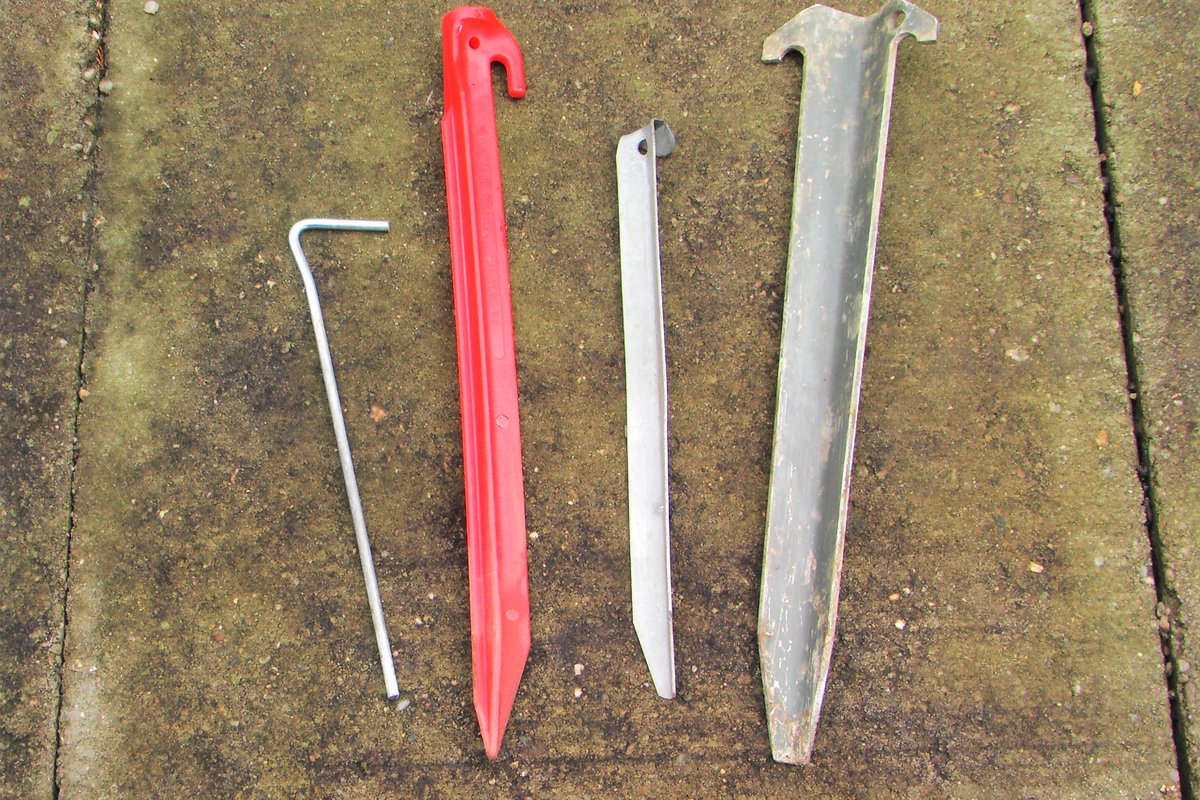
Small parts, big job
Stakes and guylines are the least glamorous parts of a tent and among the most important. They hold the floor in shape, keep the rainfly off the inner tent, stop wind from flattening walls and keep the whole thing from blowing away. Many tents ship with basic stakes that work in ideal soil but bend, pull out or fail in hard, rocky, sandy or snowy ground. Upgrading stakes and learning a few guyline habits is one of the cheapest ways to make a tent perform better. This guide covers both. Always follow your tent maker's setup instructions; it is designed around specific stake and guyout points.
Even freestanding tents need stakes
Freestanding tents stand up without stakes, which is handy for moving the tent around before you commit to a spot. But without stakes, an empty freestanding tent can blow away in a gust, and the rainfly usually needs to be staked out to keep it off the inner tent and shed water properly. See freestanding tents explained for more. Stake every corner and every fly guyout point the manufacturer provides, especially when wind or rain is possible.
Stake types and where they work
Thin wire or pin stakes are the classic basic stake: a simple metal rod with a hook. They work in firm, normal soil but can bend in hard ground and pull out of soft soil easily.
Y-shaped and V-shaped stakes have a three-sided or angled profile that resists bending and holds better in a wide range of soils. They are a common upgrade and a good all-round choice for car camping and backpacking.
Nail-style stakes (often steel or titanium) are thin, stiff and hard, designed to be driven into compacted, rocky or frozen ground where other stakes bend.
Long, wide stakes in plastic or metal have more surface area for soft soil, loose duff and some sand.
Sand and snow stakes are wide, scoop-shaped or perforated, and are buried rather than driven, sometimes sideways (a "deadman" anchor). They work in sand and snow where ordinary stakes have nothing to hold.
Heavy steel stakes are made for large family tents, canopies and windy campgrounds where weight does not matter. Pairing them with a mallet makes setup easier on firm ground.
Materials matter too. Aluminum is light and fairly strong; steel is heavy and tough; titanium is light and strong but more expensive; plastic is inexpensive and can be wide but may crack in cold or hard ground. Bright colors or reflective cord loops make stakes easier to find and less likely to be left behind.
How many stakes to bring
Count every stake point and guyout point on your tent and fly, then add a few spares. Many tents come with just enough stakes for the corners, not the guylines. For a car camping tent, bring a mix: standard stakes for normal ground, a few nail-style stakes for hard spots and a few long stakes for soft spots.
Driving stakes well
- Angle the stake roughly 45 degrees away from the tent, so the stake leans away from the direction of pull. This resists pull-out better than a vertical stake in most soils.
- Push by hand or with your foot in soft ground. In firm ground, use a mallet, a smooth rock or the flat of a shoe sole; avoid hitting the head with a sharp rock that can deform it.
- Leave a little head showing so you can hook the loop and pull it out later.
- If you hit a rock, pull the stake and try an inch or two to the side rather than bending it.
- Align corners first: stake two diagonal corners, then the other two, pulling the floor taut but not stretched, so the poles and fabric sit square.
Removing stakes without bending them
Pull a stake out along the same angle it went in. Use the hook of another stake or a stake puller through the head loop, rather than yanking on the tent's webbing loop, which can tear the tent. Twisting gently while pulling helps in sticky soil. Count stakes as you pack up; most lost stakes are left behind in grass at the end of a trip.
Guylines: what they do
Guylines are cords that run from loops on the rainfly to stakes on the ground. They pull the fly out away from the inner tent, which improves ventilation and reduces condensation (see tent ventilation and condensation), and they brace the tent against wind so poles do not flex as much. On many tents, the tent is only rated for its stated weather performance when all guylines are used.
Tensioning guylines
Most guylines come with small plastic or aluminum tensioners that slide to lengthen or shorten the line. Run the guyline out in line with the seam or pole it attaches to, stake it out at a distance that gives a gentle angle (a common rule of thumb is roughly as far from the tent as the attachment point is high, but follow the maker's guidance), and pull it snug. Tight is good; banjo-string tight can stress fabric and seams. Nylon flies sag when wet and cold, so re-tension guylines at dusk and after rain starts.
Knots worth knowing
If your tent lacks tensioners or a cord breaks, two knots go a long way:
- Taut-line hitch: an adjustable loop that slides to tighten and holds under load. Ideal for guylines.
- Bowline: a fixed loop that does not slip and is easy to untie, good for tying cord to a tent loop or tree.
Practice both at home with a piece of cord until you can tie them in the dark. Our setting up a camp tarp guide uses the same knots.
Wind, rocks and tricky ground
In very hard or rocky ground where stakes will not go in, you can tie guylines to large rocks, logs or tree roots (without damaging trees), or lay stakes horizontally under heavy rocks as anchors. In sand or snow, bury stakes or stuff sacks filled with sand or snow sideways as deadman anchors. In wind, pitch the narrowest, lowest end of the tent into the wind, stake upwind first and use every guyline. Pitching a tent in wind covers more storm setup, and thunderstorm and lightning safety covers what to do when storms arrive.
Guyline safety and visibility
Guylines are trip hazards, especially at night. Reflective cord helps, and so does tying a small piece of bright tape or a glow marker to each line. Teach kids to walk around the outer edge of guylines. Do not run guylines across paths or near fire rings.
Care and storage
Rinse sand and mud off stakes before storing them, straighten bent wire stakes gently or replace them, and check guylines for fraying where they rub on tensioners. Keep stakes in a separate sturdy stake bag so sharp tips do not poke through the tent body. Store the tent dry as described in cleaning and storing a tent.
Bottom line
Bring more and better stakes than your tent came with, matched to the ground you expect; drive them at an angle away from the tent; use every guyline and re-tension them as conditions change; and learn a taut-line hitch and bowline. A well-staked, well-guyed tent is quieter, drier and far more storm-worthy.
Filter tents by spec → Compare up to 3 →
Related guides
- How to Pitch a Tent in Wind
- How to Set Up a Tent the First Time
- How to Set Up a Camp Tarp
- Tent Footprints and Groundsheets Explained
- Freestanding and Non-Freestanding Tents: Which Design Fits Your Trip
General guidance from CampTier, based on manufacturer instructions and common outdoor practice. We don’t claim hands-on testing. Always follow your gear maker’s care and safety instructions. See our safety notes.