
How to Pitch a Tent in Wind
Keep a freestanding tent on the ground when gusts pick up: orientation, staking order, guy lines, and when to wait or move.
By the CampTier team · Updated 2026-10-15 · About 5 min read
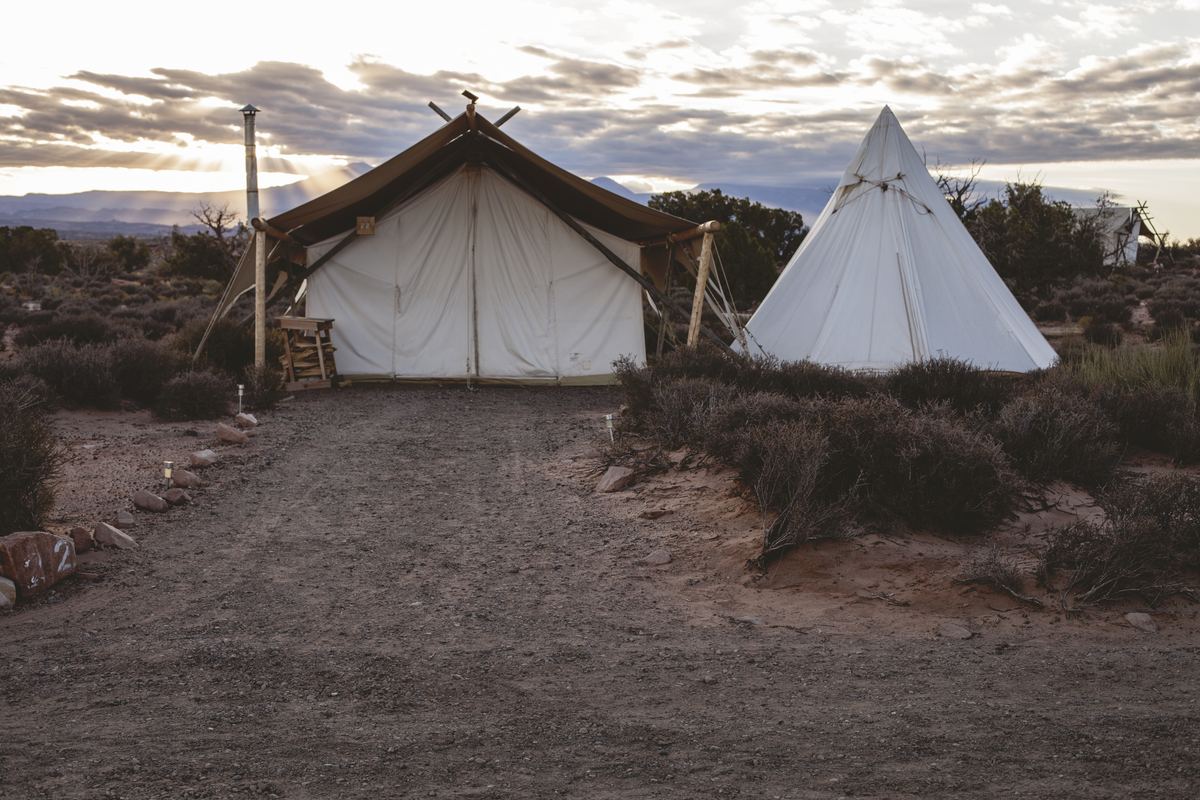
Wind is why stakes exist
A freestanding tent that looks solid on a calm afternoon can skitter across a pad in a gust. Treat every pitch as if wind will arrive overnight: stake early, guy early, and orient the tent on purpose.
Orient the narrow end into the wind
Point the lower, narrower end of the tent toward the prevailing wind when the design allows. Present less wall area. Cabin tents with tall vertical walls catch more force—pick a more sheltered pad if you have a lodge-style tent.
Use natural windbreaks carefully: a dense tree line helps; a single tall tree can drop branches. Avoid the windiest crest of a ridge when a lower site is available and legal.
Stake as you go, not at the end
In rising wind:
- Lay out the footprint and body; immediately stake two upwind corners so the tent can’t leave.
- Add poles carefully; keep a hand on the structure.
- Stake remaining corners.
- Get the rainfly on quickly—fly fabric is a sail until it’s clipped and staked.
- Deploy all guy-out points, not just the corners.
If you’re alone, partially stake the body before raising poles so a gust can’t flip the limp fabric over your head.
Guy-line technique
- Angle stakes away from the tent roughly 45°.
- Use a taut-line hitch or the line’s hardware so you can retension after fabric stretches.
- Prefer longer stakes or screw stakes in soft soil; rock stakes or deadman anchors (stake buried horizontally) in sand or snow.
- Soften shock on poles: lines should firm the fly without yanking pole joints sideways.
When stakes won’t hold
Rock, roots, and packed gravel defeat short stakes. Options:
- Share a stake with a rock pile (stake through a loop, then weight with rocks—don’t pinch coated fabric under sharp rock edges).
- Move to a soil patch if the campground allows.
- Use heavier stakes from an aftermarket kit.
Know when not to pitch
If sustained winds exceed what your tent class is meant for, or if thunderstorms with damaging gusts are forecast, delay or choose a building/camper alternative. No tent is a storm shelter. Follow ranger advice and campground closures.
After the gusts
Retension lines; wind loosens stakes. Check poles for bends. If a pole snapped, many kits include a sleeve repair tube—use it as a temporary splint and replace the pole later per the brand.
Specs and season ratings on Tents tell you design intent, not a wind guarantee. Practice the calm-weather pitch first: how to set up a tent.
Choosing a site with wind in mind
Look for natural shelter downwind of dense shrubs, boulders or a rise in the land. Avoid funnels such as gaps between hills or narrow valleys, where wind speeds up. On a beach or lakeshore, wind often shifts between day and night, so a site with shelter on more than one side is a bonus. Check campground rules before moving off a designated pad.
Pre-attach guy lines
Wind makes fiddly tasks harder. Before the trip, attach guy lines to every guy-out point on the fly and tie or use the line tensioners so they’re ready to go. Bundle each line with a simple slip knot so it doesn’t tangle in the bag. At camp, you’ll only need to unwind and stake them.
Night checks
If wind rises after dark:
- Listen for a flapping fly; that means a guy line or corner loosened.
- Check stakes on the upwind side first.
- Keep shoes and a headlamp by the door so you can go out quickly and safely.
- Never leave a tent unattended and unstaked in wind, even for a short walk.
Pole care in wind
Poles can bend before they break. If you see a pole flexing a lot in gusts, add more guy lines or rotate the tent so a narrower end faces the wind. If a pole cracks, splint it with the repair sleeve or some tape and a stake, and lower the profile if you can. Replace the damaged section after the trip; many brands sell pole sections individually.
Tent design traits that help in wind
- Lower profile and fewer flat walls
- More pole crossings
- More guy-out points, especially halfway up the walls
- A fly that attaches to the poles (with hook-and-loop wraps or clips), not just at corners
You can filter tents by packed size, seasons and peak height on our tents page, then check the brand’s product page for guy-out points and pole details.
FAQ
Do I really need to use every guy line?
In calm weather, a few may do. In real wind, use all of them. That’s what they’re for, and it reduces stress on poles and seams.
Can I park my car as a windbreak?
Often, yes. A car parked upwind of a tent on a campsite can soften gusts. Keep a safe distance and never run the engine for warmth near a tent because of carbon monoxide.
Stakes for different ground
The stakes that come with many tents are fine for firm soil but can pull out in sand, snow or loose ground. Options:
- Y- and V-shaped stakes hold better than thin wire pegs in most soils.
- Longer stakes help in soft or sandy ground.
- Sand and snow anchors are wider and buried horizontally.
- Rocks can hold lines in rocky ground where stakes won’t go in; tie the line around a heavy rock or pile rocks on top of a stake.
Drive stakes at an angle, leaning away from the tent, so the load pulls against the soil.
Taking a tent down in wind
Wind can grab a tent while you take it down just as easily as while you put it up. Keep at least the upwind stakes in until the poles are out. Remove the fly first, roll it up quickly, then collapse the poles. Keep the stuff sack attached to the tent or in a pocket so it doesn’t blow away. Two people make this much easier.
Noise and sleep
A tent in wind can be loud. Tight guy lines, a well-tensioned fly and an orientation with the narrow end into the wind reduce flapping. Earplugs help many campers sleep through the noise. If gusts are strong enough that poles are bending heavily, consider sleeping in the car.
Filter tents by spec → Compare up to 3 →
Related guides
- How to Set Up a Tent the First Time
- How to Pitch a Tent in the Rain
- Tent Season Ratings: What 3-Season and 4-Season Actually Mean
- How to Choose and Set Up a Campsite
General guidance from CampTier, based on manufacturer instructions and common outdoor practice. We don’t claim hands-on testing. Always follow your gear maker’s care and safety instructions. See our safety notes.