
Breaking camp: packing up efficiently and leaving a clean site
A step-by-step routine for the last morning of a camping trip: planning around checkout time, packing sleeping gear, drying or bagging a wet tent, putting out the fire, cleaning the kitchen, a final site sweep and what to do with gear once you get home.
By the CampTier team · Updated 2026-10-15 · About 5 min read
Why packing up deserves a plan
The last morning of a camping trip is often the most rushed. People are tired, the coffee is not ready, kids want one more hour at the creek and the campground checkout time is approaching. Without a plan, gear gets stuffed into the car wet and dirty, small items get left behind and the site is not quite as clean as it should be. A simple routine makes breaking camp faster and calmer, protects your gear and leaves the site ready for the next campers.
This guide sets out a practical order of operations for packing up a car campsite, with notes for backpacking trips. Adapt it to your group and your gear.
Plan the night before
A little work in the evening saves a lot of time in the morning.
- Check the checkout time. Many campgrounds post a checkout time for each site. Plan breakfast and packing around it.
- Pack what you no longer need. Games, extra chairs, the second lantern and spare firewood can go back in the car before bed.
- Keep morning gear separate. Leave out only what you need for breakfast and the morning.
- Check the forecast. If rain is expected overnight or in the morning, think about whether you can pack the tent before it arrives, or plan to dry it at home.
- Assign jobs. On group trips, decide who handles the kitchen, the tents and the fire. Our guide to sharing group gear on car camping trips covers splitting chores.
A practical order for the morning
Every group finds its own rhythm, but this order works well for many campers:
- Air out sleeping bags. When you get up, open sleeping bags and drape them over the tent or a line to air out while you have breakfast.
- Make breakfast simple. A quick, low-mess breakfast leaves less to clean.
- Pack the inside of the tent. Deflate pads, stuff or roll bags, and pack clothes and personal items. Shake out sand and crumbs.
- Put out the fire if you had one (see below).
- Clean and pack the kitchen.
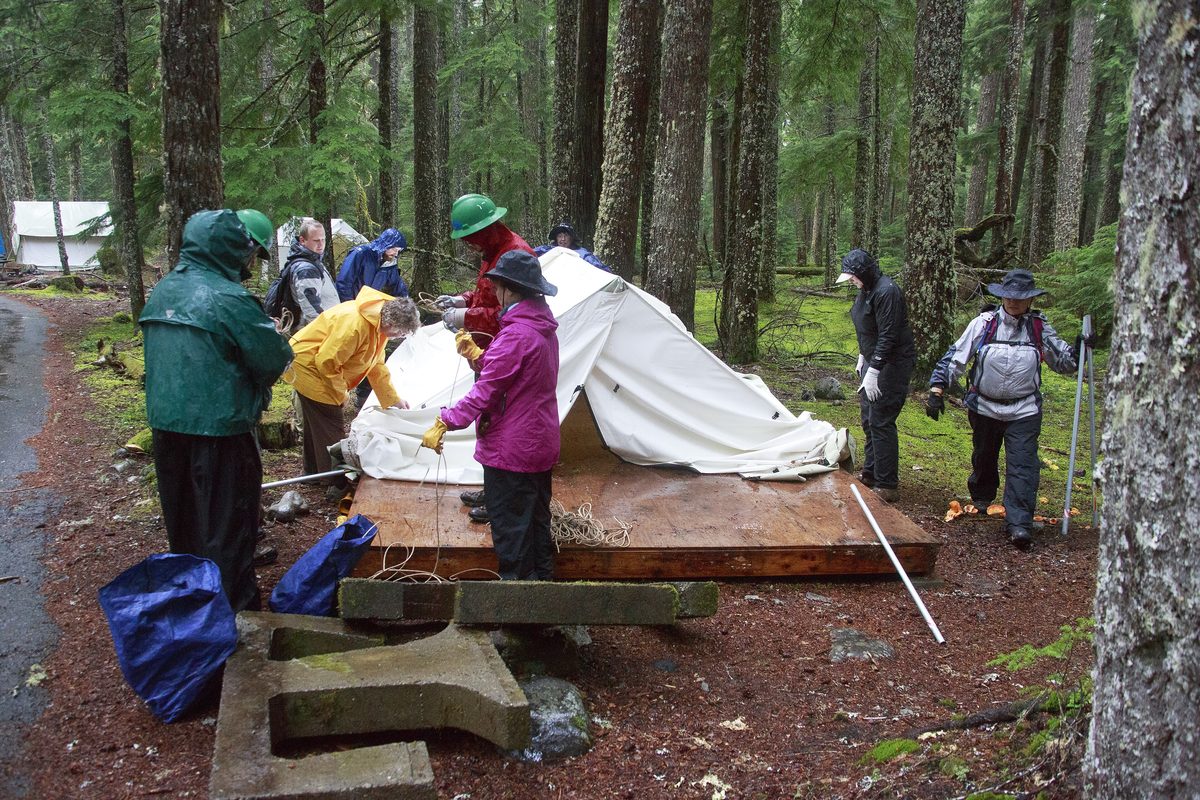
- Take down the tent and shelters.
- Load the car with the heaviest items first.
- Do a final site sweep.
Sleeping gear
Let pads and bags air out for a while if there is time, since they absorb moisture from your body overnight. Open the valves on self-inflating pads and roll them toward the valve to push air out. Stuff sleeping bags loosely into their sacks for the trip home, but store them uncompressed once you are home. See packing and storing a sleeping bag.
Taking down the tent
- Empty the tent fully and shake it out by turning it on its side, or lifting it by the floor, so debris falls out the door.
- Dry what you can. If there is sun, flip the tent over to dry the floor and leave the fly in the sun while you pack the kitchen. Wipe heavy dew or condensation off the fly with a small towel.
- Remove stakes carefully. Pull stakes straight out, using another stake or a stake puller as a hook rather than yanking on guylines or loops. Count stakes as they go into their bag.
- Collapse poles from the middle. Fold shock-corded poles by separating sections from the center outward, so the cord is not stressed.
- Fold or stuff. Follow your tent maker's guidance. Many campers stuff the body and fly rather than folding along the same lines every time, which can wear creases.
If the tent is wet when you pack it, bag it separately from dry gear and set it up or hang it to dry as soon as you get home. A tent stored damp can develop mildew and odors quickly. See drying and airing gear after rain and cleaning and storing a tent.
Putting out the fire
An abandoned or poorly extinguished campfire can start a wildfire. Smokey Bear's long-standing advice is to drown, stir and feel:
- Drown the fire with plenty of water, not just a splash.
- Stir the ashes and embers with a stick or shovel, and add more water.
- Feel the ashes with the back of your hand held close above them. If anything still feels warm, repeat.
Do not bury a fire with dirt, which can let embers smolder. Leave the fire ring clean of trash, foil and food scraps. See building a safe campfire.
Cleaning and packing the kitchen
- Wash and dry dishes following dishwashing at camp, and pack them dry to avoid odors.
- Drain the cooler's meltwater where the campground allows, and wipe it out. See cleaning and storing a cooler.
- Pack fuel canisters upright and separate from food.
- Collect every bit of trash and recycling, including twist ties, bottle caps and food scraps, and use the campground's bins or take it home.
Loading the car
Load heavy, rarely needed items first, such as coolers, water jugs, stoves and furniture. Pack wet and dirty gear together and away from dry clothes and bedding. Keep a bag of things you will want on the drive, such as snacks, water, a jacket and a phone charger, near the front. Make sure nothing blocks your view out of the rear window and that loose items cannot slide forward when you brake.
The final site sweep
Before you drive away, walk the whole site slowly, ideally with two people.
- Look for stakes, tent pegs, clothespins, guyline ends and small toys in the grass.
- Check the picnic table, bear box, under the table and around the fire ring.
- Pick up microtrash, such as wrappers, bits of foil and food scraps.
- Make sure the fire is cold to the touch.
- Return anything you moved, such as picnic tables, and leave the site as you found it or better.
Our guide to campsite etiquette and Leave No Trace explains why small details matter.
Backpacking variations
On a backpacking trip, the same principles apply on a smaller scale. Pack the inside of the tent first, keep rain gear and snacks near the top of the pack, filter water for the day before you leave camp and check the ground where you slept, cooked and sat for anything left behind. Scatter natural materials you moved, such as sticks, back where they were.
Once you are home
Unpack within a day if you can. Dry and air the tent, sleeping bags and pads, clean the cooler and stove, restock consumables like fuel, batteries and first-aid supplies and make a short list of anything that broke or was missing. That list is the start of your next packing checklist. See gear storage between seasons.
Bottom line
Breaking camp goes smoothly with a little planning: pack what you can the night before, air out sleeping gear, dry the tent if you can, drown, stir and feel the fire, pack the kitchen clean, load heavy items first and finish with a slow site sweep. Then dry everything at home so it is ready for the next trip.
Filter tents by spec → Compare up to 3 →
Related guides
- How to Clean and Store a Tent
- Drying and airing gear after rain
- Campsite Etiquette and Leave No Trace
- How to Store Camping Gear Between Seasons
- How to Set Up a Tent the First Time
General guidance from CampTier, based on manufacturer instructions and common outdoor practice. We don’t claim hands-on testing. Always follow your gear maker’s care and safety instructions. See our safety notes.