
Building a Safe Campfire (and Putting It Out Cold)
How to check fire rules, build a fire in an existing ring, choose and gather wood responsibly, cook over coals, and drown a campfire until it is cold to the touch.
By the CampTier team · Updated 2026-10-15 · About 5 min read
Start with the rules, not the matches
A campfire is one of the best parts of camping and one of the easiest ways to cause real harm. Before you pack firewood, check the current fire restrictions for the exact place you are going. Land managers, state parks and campgrounds post restrictions that can change week to week during dry or windy periods, and they range from "fires only in provided rings" to complete bans that include charcoal. Some areas allow gas stoves with a shut-off valve during bans while prohibiting wood fires. Call or check the official website for the park or forest, read the sign at the campground entrance, and ask the host if there is one. If a ban is in effect, cook on a stove (see camp stoves and fuel) and enjoy a lantern-lit evening instead.
Use an existing fire ring
In developed campgrounds, build fires only in the provided metal ring or established fire pit. In backcountry areas where fires are allowed, use an existing fire ring rather than building a new one, and follow Leave No Trace principles. Before lighting, look up and around: no low branches overhead, no dry grass, tent, tarp, chairs or gear within several feet, and nothing flammable downwind. Clear pine needles and leaves from around the ring. Keep a full bucket of water (or a large pot and a shovel or trowel) next to the fire before you light it, not after.
Firewood: buy local, burn small
Moving firewood can spread invasive insects and tree diseases that have killed large numbers of trees in some regions. Many states and parks restrict bringing firewood from outside the area, and some require certified heat-treated wood. The simple rule is to buy firewood near where you will burn it, or buy certified wood if the rules require it. Where gathering is allowed, collect only dead and downed wood that you can break by hand. Do not cut live trees or snap branches off standing trees, dead or alive; standing dead trees are habitat for birds and insects.
Sort your wood into three piles before you start:
- Tinder: dry material that catches from a single match, such as dry grass, birch bark, wood shavings, paper or commercial fire starters.
- Kindling: sticks from pencil-lead to thumb thickness.
- Fuel wood: wrist-thick and larger pieces, ideally dry and seasoned. Wet or green wood smokes, hisses and burns poorly.
Smaller fuel pieces burn more completely and leave less half-burned charcoal behind. A modest fire is easier to manage and easier to put out than a bonfire.
Two reliable fire lays
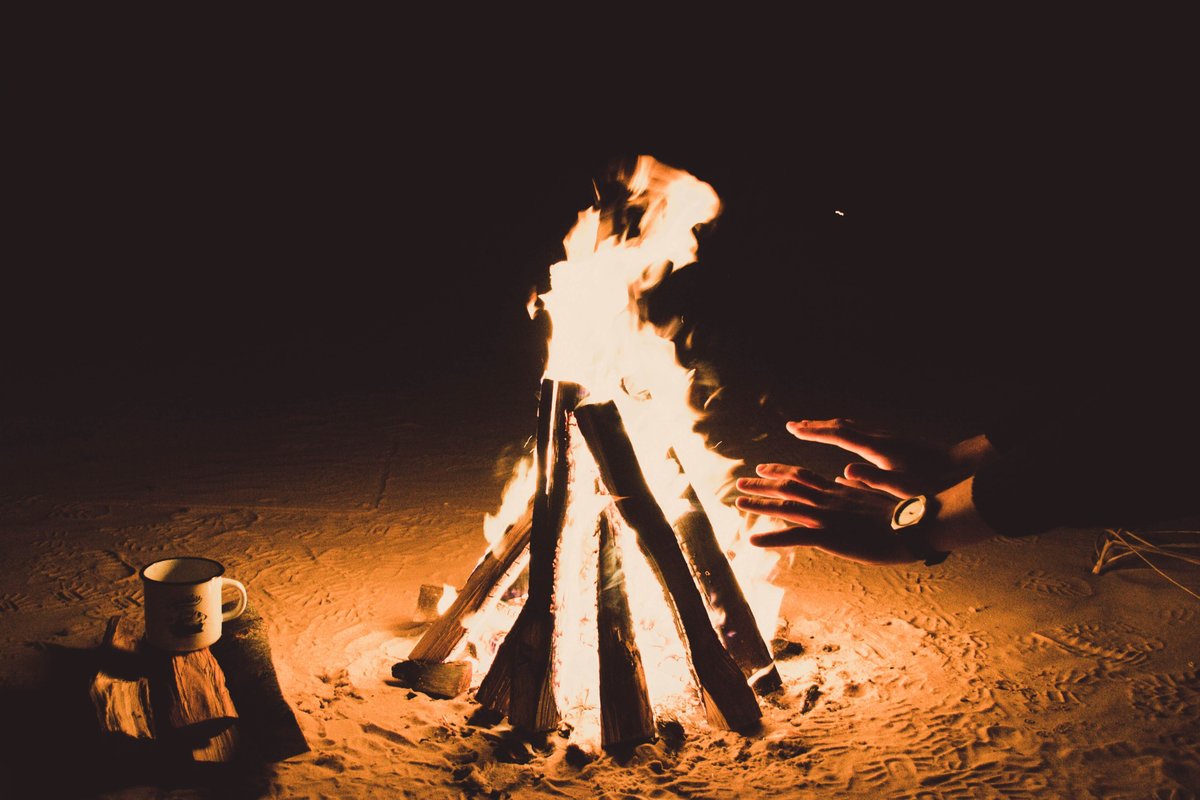
Teepee: place a loose ball of tinder in the center, lean kindling around it in a cone with a gap on the upwind side, then light the tinder through the gap. As the kindling catches, add larger sticks around the cone. Teepees light quickly and throw heat and light, which makes them good for a social evening fire.
Log cabin: set two pieces of fuel wood parallel, lay two more across them, and build up a few layers like a square cabin around a tinder and kindling core. Log cabins burn steadily and collapse into an even bed of coals, which is what you want for cooking.
Whichever you choose, start small and add wood gradually. Do not use gasoline, lantern fuel or other accelerants to start or revive a fire; vapors can flash and cause severe burns. If your wood is too wet to light with tinder and kindling, that is a sign to switch to a stove for the night.
Cooking over a fire
Flames are for light; coals are for cooking. Let the fire burn down to glowing coals before you cook, then rake a flat bed of coals to one side of the ring for even heat. A grill grate (many campground rings have one built in), a cast iron skillet or foil packets work well. Keep heavy pans stable so they cannot tip into the fire, use long-handled tools and heat-resistant gloves, and keep plastic utensils and food bags well away from the ring. Our weekend camping meal plan includes ideas that suit fire cooking, and camp kitchen basics covers setup and food safety.
Fire safety habits around camp
- Never leave a fire unattended, even for a short walk to the bathroom. Assign someone to watch it.
- Set a kid perimeter. Mark a line a few big steps from the ring that children and dogs do not cross. Teach kids to walk, not run, near the fire and to stop, drop and roll if clothing catches. Supervise marshmallow roasting closely; a flaming marshmallow waved around is a common way to get burned. See kid-friendly camping activities.
- Watch the wind. If gusts start carrying sparks or embers, let the fire die down and put it out.
- Do not burn trash. Plastic, foil, food scraps and cans do not burn cleanly; they leave a mess, smell and attract animals. Pack trash out or use campground bins.
- Keep fuel bottles, aerosol cans and lighters away from the fire ring.
- Mind your clothing. Synthetic fabrics can melt when hit by sparks. A wool or cotton layer is more forgiving around a fire, while synthetics remain better for hiking.
Putting it out cold
"Out" means cold to the touch, not just no visible flame. Embers buried in ash can stay hot for many hours and rekindle when the wind picks up. Plan to start putting the fire out well before you go to bed or leave camp:
- Let the wood burn down to ash as much as possible.
- Drown the fire with plenty of water. Pour slowly so steam and ash do not spray up at you, and soak all the embers, not just the red ones.
- Stir the ashes and embers with a stick or shovel, scraping any partly burned logs to remove embers.
- Drown again and keep stirring until hissing stops.
- Feel for heat by holding the back of your hand close to the ashes. If it is too hot to touch, it is too hot to leave.
If water is scarce, mix in dirt or sand and stir, but never simply bury a fire; buried coals can smolder and spread underground through roots. Repeat until everything is cold.
When to skip the fire
Skip the fire if restrictions apply, if it is very windy or dry, if you are too tired to watch it or put it out properly, or if you are short on water. A lantern and good company make a fine evening. Campsite basics covers lighting and setting up a comfortable site without one.
Bottom line
Check current rules, use an existing ring, buy firewood locally, build small, keep water at hand, never leave the fire alone and drown, stir and feel until it is cold. Those habits keep campfires the best part of the trip rather than the reason a forest is closed next season.
Filter camp kitchen by spec → Compare up to 3 →
Related guides
- Campsite Etiquette and Leave No Trace
- Camp Stoves and Fuel Basics
- Planning Camping Meals for a Weekend
- Camp Kitchen Basics: Stoves, Cooking and Cleanup
- Camping With Kids: Activities and Gear That Help
General guidance from CampTier, based on manufacturer instructions and common outdoor practice. We don’t claim hands-on testing. Always follow your gear maker’s care and safety instructions. See our safety notes.