
Swimming safely at lakes and rivers near camp
Practical water safety for campers who swim in lakes, rivers and ponds: choosing designated swimming areas, hidden hazards in natural water, supervising children, life jackets, the buddy system, cold water, currents and dams, alcohol and medications, checking water quality advisories and what to pack for a swim.
By the CampTier team · Updated 2026-10-15 · About 5 min read
Why water safety deserves a plan
A swim in a lake or river is one of the best parts of a summer camping trip. It cools everyone down after a hot day and keeps kids busy for hours. But natural water is very different from a swimming pool. The bottom is often hidden, depth changes suddenly, currents can be strong and help may be far away. The CDC notes that drowning can happen in seconds, is often silent and can happen to anyone with access to water.
The good news is that a few habits make a big difference. This guide covers how to pick safer places to swim near camp, supervise children, use life jackets and recognize hazards that are easy to miss. It is general guidance; follow posted rules, lifeguards and park staff wherever you are.
Choose a designated swimming area when you can
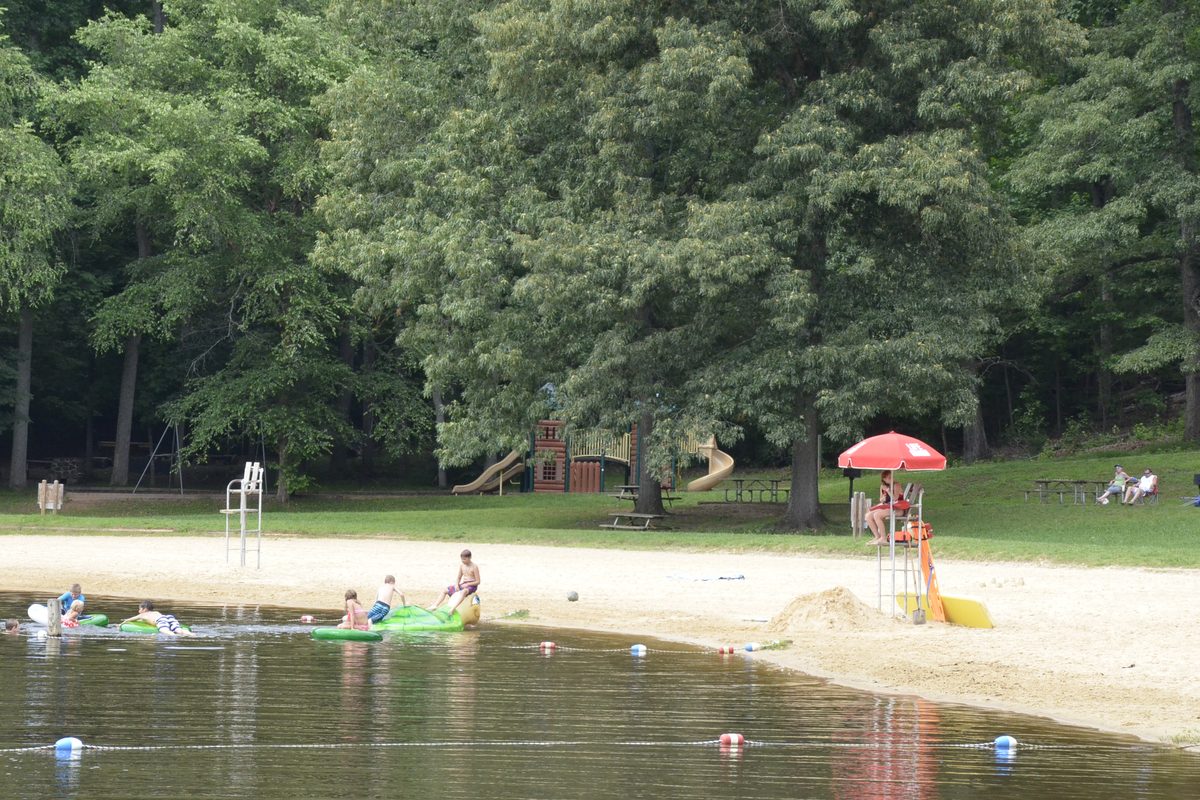
Many campgrounds at lakes and rivers have a marked swimming beach, often roped off and sometimes staffed by lifeguards in season. These areas are usually chosen because the bottom is gentle and boats are kept away. The CDC recommends choosing swimming sites with lifeguards when possible.
If there is no designated area:
- Ask staff or rangers where people usually swim and what to avoid.
- Read posted signs. Some waters are closed to swimming because of currents, boat traffic, wildlife or water quality.
- Look before you enter. Walk in slowly rather than jumping or diving, and check depth and footing.
- Avoid boat ramps, docks and channels where boats travel.
Know the hidden hazards of natural water
The CDC points out that lakes, rivers and oceans have hidden hazards such as dangerous currents or waves, rocks or vegetation and limited visibility. Near camp, watch out for:
- Sudden drop-offs. A shallow beach can give way to deep water within a few steps.
- Underwater rocks, logs and debris that you cannot see in murky water. Never dive into water of unknown depth.
- Currents in rivers, which can be much stronger than they look from shore, especially after rain or snowmelt.
- Water below dams, where releases can change water levels and currents quickly. Obey warning signs and stay out of restricted zones.
- Cold water. Mountain lakes and spring-fed rivers can stay cold even on hot days. Cold water can make it hard to breathe and swim, so enter gradually and keep swims short.
- Weather. The CDC advises checking the forecast before water activities, since conditions can change quickly and bring flash floods, strong winds and lightning. Get out of the water at the first sign of thunder; see thunderstorm and lightning safety at camp.
Supervise children closely and constantly
Children need an adult's full attention near water. The CDC recommends designating a responsible adult to supervise closely and constantly when children are in or near water, and avoiding distractions like reading, phones and alcohol while doing so. It also advises supervising children closely even when lifeguards are present.
Practical habits for camp:
- Name a water watcher. Take turns so the adult on duty is not also cooking, setting up or chatting.
- Keep young children within arm's reach in and near the water.
- Remember that camp itself can be near water. A campsite on a lakeshore or river needs a rule that children do not go to the water without an adult.
- Swimming lessons help, but they are not protection on their own. The CDC notes that children who have had lessons still need close supervision.
See our guide to camping with babies and toddlers for setting up a safer family campsite.
Use life jackets in natural water
The CDC says life jackets should be used by children for all activities while in and around natural water, and that they can also help weaker swimmers of all ages. Air-filled toys, rings and foam noodles are not safety devices.
Choose a life jacket that fits the wearer's weight and size, is approved for use in your country and is buckled and snug. Have children try theirs on before the trip. Anyone on a boat, canoe, kayak or paddleboard should wear one as well; see packing for canoe and kayak camping.
Use the buddy system
Always swim with a buddy. The CDC recommends this for everyone and notes it is especially important for people with seizure disorders or other conditions that increase drowning risk. Agree on where you are swimming, how far you will go and when you will come back. Long swims across a lake are safer with a paddler or boat alongside.
Alcohol, medications and breath-holding
The CDC advises avoiding alcohol before or during swimming, boating or other water activities because it impairs judgment, balance and coordination, and never drinking while supervising children. It also suggests avoiding swimming if you take medications that affect balance, coordination or judgment. Do not hyperventilate before swimming underwater or hold your breath for long periods; the CDC warns this can cause people to pass out and drown.
Check water quality
Lakes and rivers can sometimes carry germs or harmful algae. Before swimming:
- Look for advisories posted at the beach or on the park or state health department website.
- Avoid water that looks like spilled paint, foam or scum, or that smells bad, and keep dogs out of it too.
- Stay out after heavy rain in places where runoff may carry pollution.
- Do not swallow the water, and rinse off afterward if showers are available.
- Keep the water clean. Swim away from where others collect drinking water, change diapers away from the shore and use toilets rather than the water.
Know what to do in an emergency
The CDC encourages people to learn CPR, since it can help in the minutes before emergency responders arrive. At camp:
- Know where you are, including the campsite number or beach name, so you can direct help.
- Check for phone signal at the beach before you need it.
- Reach or throw, don't go. Untrained rescuers who jump in can become victims. Reach with a pole or throw something that floats, and call for help.
- Keep a first aid kit nearby; see camp first aid kit basics.
What to bring for a camp swim
- Life jackets for children and weaker swimmers
- Water shoes for rocky or muddy bottoms
- Towels and a warm layer for after the swim
- Drinking water, since swimming in the sun is still thirsty work
- Sun protection; see sun protection for campers and hikers
- A dry bag for phones and keys
Bottom line
Swim in designated areas when you can, check depth and currents before getting in, watch children closely and constantly, put life jackets on kids and weaker swimmers, always swim with a buddy and skip alcohol around the water. Check for water quality advisories and get out at the first sign of a storm.
Related guides
- Camping with babies and toddlers: sleep, safety and packing
- Hot-Weather Camping Tips
- Packing for canoe and kayak camping trips
- Camping With Kids: Activities and Gear That Help
- Sun protection for campers and hikers
General guidance from CampTier, based on manufacturer instructions and common outdoor practice. We don’t claim hands-on testing. Always follow your gear maker’s care and safety instructions. See our safety notes.