
Packing a camp toiletry and hygiene kit
What to pack in a camp toiletry and hygiene kit for car camping and backpacking: hand washing and sanitizer, teeth and face care, toilet supplies, towels, contact lenses and medications, plus Leave No Trace habits and storing scented items safely.
By the CampTier team · Updated 2026-10-15 · About 5 min read
Why a dedicated hygiene kit helps
Staying reasonably clean at camp is not about luxury. Clean hands help prevent stomach bugs, a tidy toilet routine protects water sources and simple skin care makes a long weekend more comfortable. A small, dedicated kit that lives with your camping gear means you are not raiding the bathroom cabinet the night before a trip and forgetting the toothpaste. This guide covers what to pack for car camping and backpacking, how to use it without harming the outdoors and how to store scented items.
Start with hand hygiene
Hand washing is the most important part of the kit. The CDC recommends washing hands with soap and clean water for at least 20 seconds, especially before preparing or eating food and after using the toilet. When soap and water are not available, the CDC suggests a hand sanitizer with at least 60 percent alcohol, while noting that sanitizer does not work as well on hands that are visibly dirty or greasy.
At camp, that usually means:
- A small bottle of mild soap for hand washing
- Hand sanitizer in an easy-to-reach pocket or hung near the camp kitchen
- A simple hand-wash setup, such as a water jug with a spout, a small basin and a bag for used paper towels
Put the sanitizer where people will actually use it, such as next to the toilet path and the cooking area. Our camp kitchen basics guide covers kitchen layout.
Teeth, face and skin
A basic personal kit might include:
- Toothbrush with a cover, small tube of toothpaste and floss
- A small pack of face wipes or a washcloth
- Lip balm with SPF and sunscreen. See sun protection for campers and hikers.
- Insect repellent if you are camping where bugs are active. Our bugs and ticks guide covers products and tick checks.
- A small comb or brush, hair ties and any skin cream you use daily
Decant products into small, leakproof containers and put them in a zip bag inside the kit, since pressure and temperature changes can make bottles leak.
Toilet supplies
What you need depends on where you camp. Developed campgrounds usually have toilets or vault toilets, but it is still worth packing:
- A roll of toilet paper in a waterproof bag
- Hand sanitizer
- A headlamp for night trips to the toilet
In the backcountry, follow local rules for human waste. Many areas ask you to dig a cathole well away from water, trails and camp, and some require you to pack out waste or toilet paper. Our guide to human waste and catholes outdoors explains the details. Pack a small trowel and a dedicated bag for used paper if packing out is required.
Menstrual products should be packed out rather than buried or burned, according to Leave No Trace guidance. An opaque, sealable bag inside a second bag works well.
Washing without harming water sources
Soap of any kind, including products labeled biodegradable, should be kept out of lakes, rivers and streams. Leave No Trace guidance is to carry water at least 200 feet (about 70 adult steps) away from water sources to wash yourself or your dishes, use small amounts of soap and scatter strained wash water.
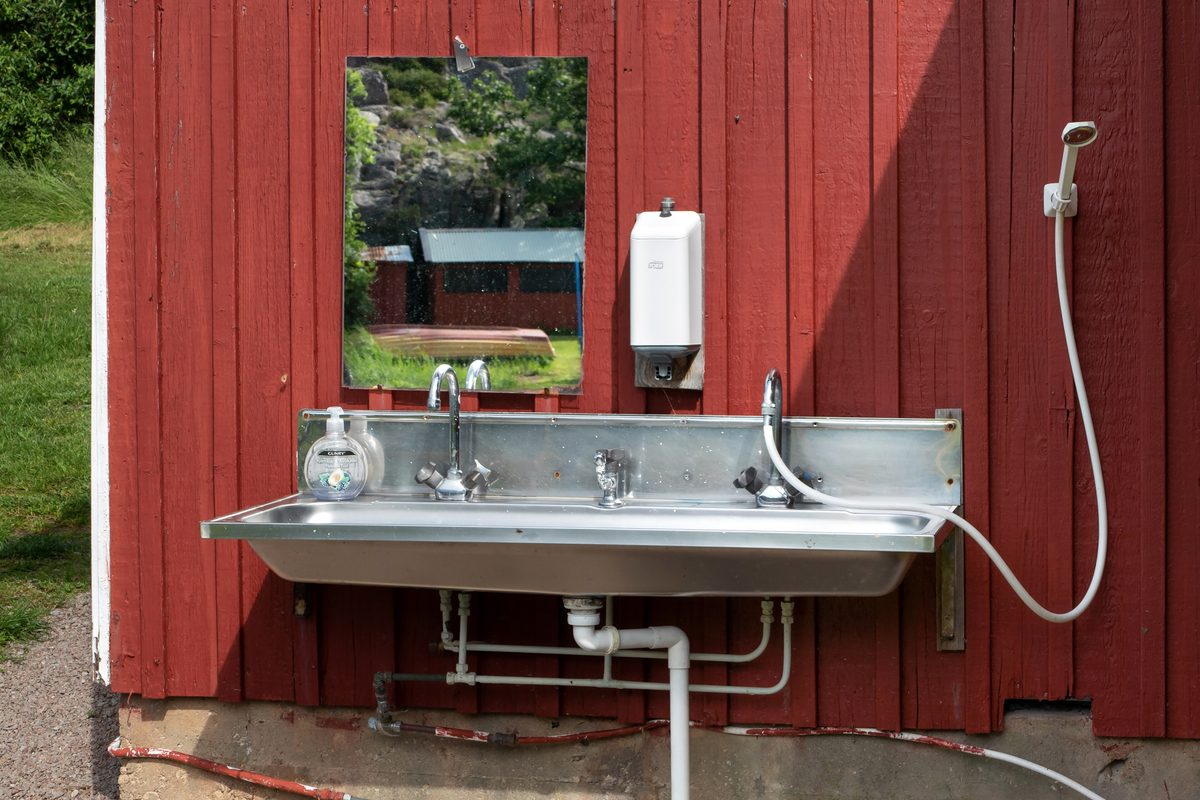
At developed campgrounds, use the sinks or wash stations provided and follow posted rules about where to empty gray water. Never wash dishes in restroom sinks if the campground asks you not to. Our guide to dishwashing at camp covers kitchen clean-up.
Towels and showers
Quick-drying microfiber towels pack small and dry faster than cotton. Many campers bring one small towel for hands and face and a larger one for showers or swimming. Hang towels to dry during the day, and bring them inside or under cover at night to avoid dew.
If your campground has showers, pack flip-flops or camp shoes, a toiletry bag that can hang on a hook and a few coins or a card if showers are paid. For sites without showers, a solar shower bag or a simple sponge bath can work. See choosing a camp shower setup for the options.
Contact lenses, glasses and medications
Contact lens wearers need a little extra care at camp. Wash and dry hands before handling lenses, and use fresh lens solution rather than water. Eye health organizations advise against letting lenses come into contact with any water, including treated water. Pack a spare pair of lenses or your glasses in a hard case in case a lens is lost or an eye gets irritated.
Keep prescription medications in their original labeled containers, with enough for the trip plus a little extra in case of delays. Store medications that need specific temperatures according to the label. Our camp first aid kit basics guide covers what to add for wounds, blisters and allergies.
Storing scented items
Toothpaste, sunscreen, lip balm, deodorant and many soaps have scents that can attract wildlife. In bear country and anywhere with food storage rules, store toiletries the same way you store food: in a bear-resistant locker, canister, vehicle where allowed or a properly hung bag. Do not keep them in your tent. Our guide to bear bags and food storage explains the main methods.
Smaller animals, such as raccoons and mice, will also chew into bags for scented items, so keep the kit closed and stored when you are not using it. See keeping small animals out of camp food.
Car camping kit and backpacking kit
For car camping, a hanging toiletry bag with hooks and pockets works well, since you can hang it from a tree branch, a tarp line or a shower hook. Weight is not a major concern, so you can bring full-size soap, a basin and extra towels.
For backpacking, trim the kit to essentials:
- Toothbrush (some people choose a small travel brush) and a small tube of toothpaste
- A tiny bottle of soap and a small sanitizer
- Toilet paper and a trowel if required
- Sunscreen and lip balm
- A small cloth or a few wipes, packed out after use
A simple checklist
- Soap, sanitizer and a hand-wash setup
- Toothbrush, toothpaste and floss
- Sunscreen, lip balm and insect repellent
- Toilet paper, trowel and packing-out bags as required
- Microfiber towel and shower shoes
- Contact lens supplies, glasses and medications
- A plan for storing scented items
Bottom line
A good camp hygiene kit is small, organized and always packed. Wash hands with soap and water when you can, use sanitizer when you cannot, keep soap out of water sources and store scented items with your food. Follow local rules for toilets and waste, and adapt the kit for car camping or backpacking. For more on low-impact habits, see campsite etiquette and Leave No Trace.
Related guides
- Human waste outdoors: catholes, wag bags and toilet paper
- Dishwashing at Camp
- Choosing a camp shower setup
- Camp First-Aid Kit Basics
- Food Storage at Camp: Bear Boxes, Canisters and Hangs
General guidance from CampTier, based on manufacturer instructions and common outdoor practice. We don’t claim hands-on testing. Always follow your gear maker’s care and safety instructions. See our safety notes.