
Food Storage at Camp: Bear Boxes, Canisters and Hangs
How to store food and scented items at a campground or in the backcountry: bear boxes, hard-sided vehicles, bear canisters and food hangs, and what counts as an attractant.
By the CampTier team · Updated 2026-10-15 · About 5 min read
Why food storage matters even without bears
Most campers think about food storage only in bear country, but raccoons, squirrels, chipmunks, ravens, jays, mice and foxes are far more common camp visitors. A cooler left open for ten minutes or a bag of trail mix in a tent can attract them. Animals that learn to get human food often become bolder and may be harmed or removed. In bear country the stakes are higher still. Good food storage protects your trip, the next campers and the wildlife. It is also a rule at many parks and forests, and rangers can issue citations for violations.
Start with the local rules
Food storage rules vary a lot by place. Some campgrounds require all food and coolers to go in a metal bear box when you are not actively cooking. Some backcountry areas require an approved bear-resistant canister and do not allow hangs. Others allow hangs or have food poles or cables. Check the park, forest or campground page, the permit information and any signs at the entrance. When local guidance differs from general advice, including this guide, follow local guidance.
What counts as an attractant
Anything with a scent can attract animals. Store all of these the same way you store food:
- Food, snacks, drinks other than water, and pet food
- Cooking gear, dirty dishes, utensils and dish soap
- Coolers, even empty ones
- Trash and recycling, including wrappers and food scraps
- Toothpaste, sunscreen, lip balm, deodorant, insect repellent and other toiletries
- Medications with flavors or scents
- Clothing that is heavily soaked in cooking smells, in strict bear areas
A simple habit: keep a dedicated "smellables" bag so everything scented lives together and goes into storage together.
Option one: campground bear boxes
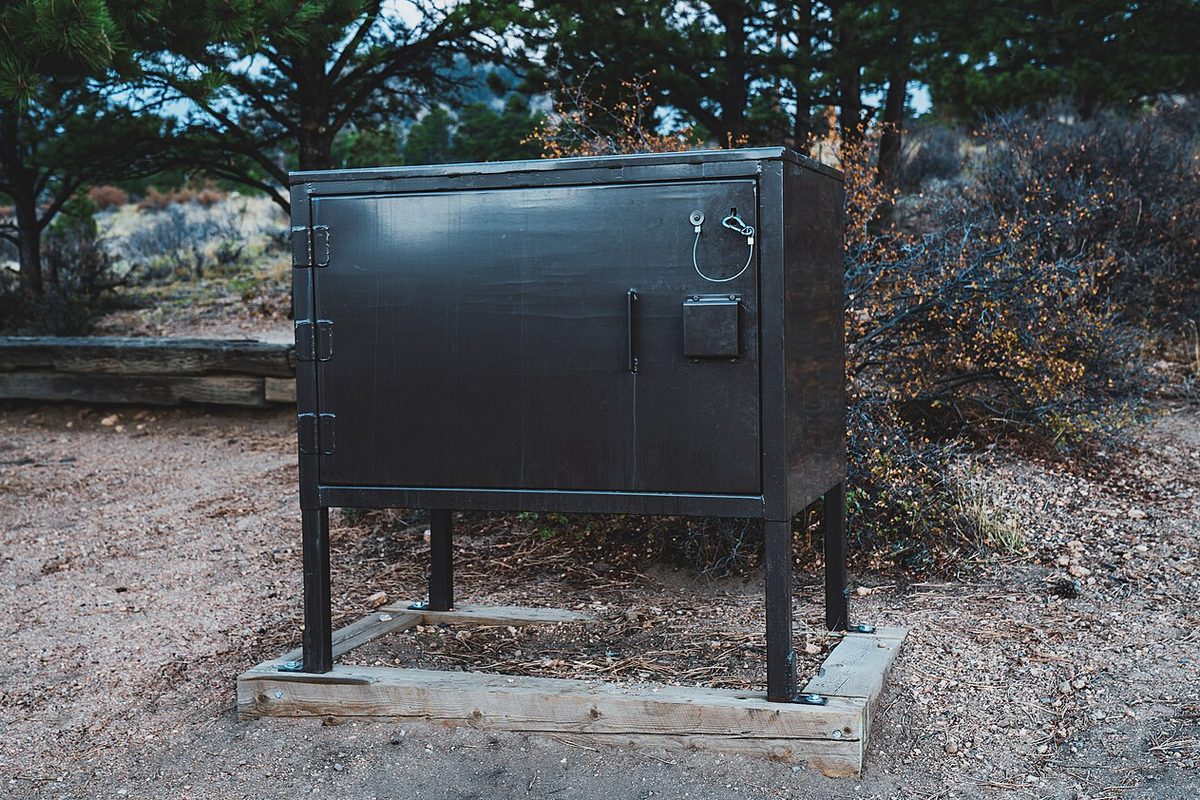
Many developed campgrounds in bear country provide metal food lockers at each site. Use them for everything on the list above when you are not cooking or eating. Close and latch them every time, even if you are stepping away for a minute. Do not leave food out "just while we hike to the bathroom." Bear boxes are shared infrastructure; leave them clean and empty when you go.
Coolers often do not fit in bear boxes, or fit only if you choose a smaller one. Check the box dimensions on the campground page before you pack. Our cooler packing guide has tips on sizing.
Option two: a hard-sided vehicle
Some campgrounds allow food in a closed, hard-sided vehicle with windows up, out of sight. Others specifically prohibit it because bears in those areas have learned to break into cars. Soft-top vehicles, truck beds and roof boxes generally do not count. If the vehicle is allowed, cover items so they are not visible and keep the cabin free of wrappers.
Option three: bear-resistant canisters
In the backcountry, a hard-sided canister is a reliable way to store food, and it is required in some areas. Many land managers keep lists of approved models; check that yours is accepted where you are going.
How to use one:
- Pack it at home to make sure your food fits. Repackaging out of bulky boxes helps.
- At camp, store it on flat ground well away from where you sleep and cook, away from cliffs or water where it could roll away.
- Do not attach rope to it or hang it; the point is that animals cannot open or carry it easily.
- Keep it closed except when you are taking something out.
Canisters add weight and space in a pack, so plan for it. Our weekend backpacking packing list includes one where required.
Option four: a food hang
Where hangs are allowed and canisters are not required, hanging food from a tree is a traditional method. It works only when done well, and in areas with experienced bears, it often does not work, which is why many places have moved to canisters.
General principles that many agencies describe:
- Hang the bag high enough that a standing bear cannot reach it, and far enough out from the trunk that a climbing bear cannot reach it from the tree. Agency guidance commonly describes roughly 10 feet or more off the ground and several feet out from the trunk, and some also specify distance below the branch. Check the local guidance for the numbers they use.
- Use a branch that is strong enough to hold the bag but too thin to support a climbing animal.
- Do the hang before dark. It usually takes longer than people expect.
- Protect the tree: use a stuff sack and a rock to throw the line, and do not saw at bark with the rope.
The two methods most often taught are a counterbalance hang (two bags balanced over a branch) and the "PCT method," which uses a small carabiner or stick to lock the line in place. Learn and practice either at home; a rushed hang in the dark rarely meets the standard.
Setting up camp around food
In bear country, many land managers suggest a triangle layout: cooking area, food storage and tents spaced well apart, with sleeping downwind if possible. Many recommend distances of a couple hundred feet or more between the sleeping area and the kitchen and food storage; follow the local number. Do not cook or eat in your tent, and do not sleep in clothes that are soaked with cooking smells.
At any campground, keep the kitchen tidy. Wipe the table, pack scraps out with your trash, and strain dishwater, putting food bits in the trash rather than on the ground. Our camp kitchen basics guide covers gray water and cleanup.
Small-critter storage
Even where bears are not an issue, rodents and birds will chew through soft bags. Hard-sided bins with latching lids in the car or on the table at night work well for car camping. Do not leave packs with snacks inside open on the ground. Squirrels and ravens can unzip or tear pockets.
Pets and food storage
Pet food and treats are attractants too. Feed pets at mealtimes and store the rest with the human food. Our camping with dogs guide covers bowls and storage.
If wildlife gets into your food
Do not try to take food back from a bear or other large animal. Move away, keep people together, and report the incident to the campground host or rangers; they track these events to keep everyone safe. Clean up thoroughly once it is safe, and secure everything else.
Quick checklist
- Local storage rules checked before the trip
- Bear box dimensions checked if you plan to store a cooler
- Smellables bag packed
- Approved canister, if required
- Hang kit (cord, stuff sack, carabiner) and practice, if hanging is allowed
- Hard-sided bins for small-critter storage at car-camping sites
- Trash bags to pack out everything
Bottom line
Store food and every scented item the same way, every time, using the method local rules require. A clean camp and a closed bear box do more for wildlife safety than any gadget. For the bigger picture, read our campsite etiquette and Leave No Trace guide.
Filter coolers by spec → Compare up to 3 →
Related guides
- How to Pack a Cooler for Camping
- Camp Kitchen Basics: Stoves, Cooking and Cleanup
- Campsite Etiquette and Leave No Trace
- Weekend Backpacking Packing List
- Camping with Dogs: Gear Side
General guidance from CampTier, based on manufacturer instructions and common outdoor practice. We don’t claim hands-on testing. Always follow your gear maker’s care and safety instructions. See our safety notes.