
Cooking over a campfire: coals, grates and simple meals
How to cook over a campfire safely: checking fire rules, building a cooking fire, using coals instead of flames, grates, cast iron and foil packets, food safety, and cleaning up.
By the CampTier team · Updated 2026-10-15 · About 5 min read
Why cook over a fire
Cooking over a campfire is one of the classic pleasures of camping. Food tastes different, the fire becomes the centre of the evening and kids love being involved. It also takes more patience and care than cooking on a stove. Flames are uneven, heat is hard to control and fire rules change with the seasons. This guide covers the basics: when campfire cooking is allowed, how to build a fire for cooking, which tools help and how to keep food safe. For everyday meals, a camp stove is still the most reliable tool; see camp stoves and fuel.
Check the rules first
Many parks and forests restrict or ban campfires during dry periods, and some areas never allow them. Before you plan a fire-cooked menu, check the land manager's website or ask at the entrance station. Look for:
- Current fire restrictions or bans
- Whether fires are allowed only in provided fire rings or grills
- Firewood rules, such as buying local wood to avoid spreading pests
- Any restrictions on gathering wood at the site
If fires are banned, plan to cook on a stove instead. Our guide to camping during fire season explains how restrictions work. Always have a stove as a backup in case the rules change while you are there.
Use the fire ring and grate
Most campgrounds provide a metal fire ring, often with a built-in grate that swings over the fire. Use it. Do not build new fire rings. Check the grate before cooking: clean off old food and ash with a grill brush or crumpled foil, and consider putting a sheet of foil or a pan between food and a grate you are not sure about.
Build a fire for cooking
A cooking fire is different from a big evening fire. You want steady, even heat, not tall flames. A common approach:
- Start the fire early, 30 to 60 minutes before you want to cook.
- Use dry, seasoned hardwood if available, which tends to burn longer and produce good coals.
- Let the fire burn down until you have a bed of glowing coals.
- Rake coals to one side of the ring for cooking, and keep a small fire going on the other side to make more coals.
Our guides to building a safe campfire and gathering and buying firewood responsibly cover the fire itself.
Cook on coals, not flames
Flames blacken the outside of food while leaving the inside raw, and they coat pots in soot. Coals give steady, radiant heat. A simple way to judge heat is to hold your hand, palm down, safely above the cooking surface and notice how quickly it becomes too hot. Move food or adjust the coals to control the heat. Create zones: a hotter area with more coals for searing and boiling, and a cooler area for keeping food warm.
Useful tools
- Long-handled tongs and spatula to keep hands away from heat
- Heat-resistant gloves for handling grates, pots and cast iron
- A cast-iron skillet or Dutch oven, which handles fire well and spreads heat evenly
- Heavy-duty aluminium foil for foil packets
- A grill grate, if the fire ring does not have one
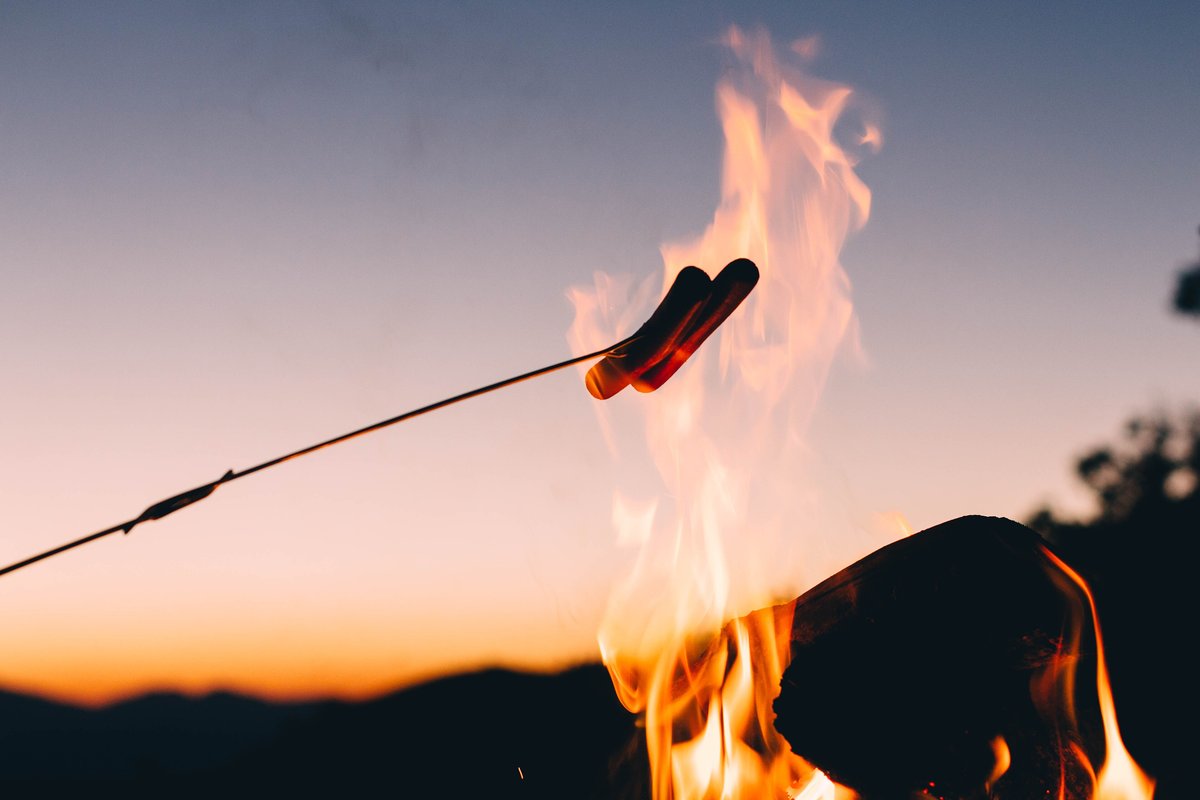
- Roasting sticks or skewers for hot dogs and marshmallows
- A food thermometer
- A bucket of water and a shovel nearby
Thin, lightweight backpacking pots can warp or scorch in a fire, and plastic handles can melt. Our guide to choosing camp cookware explains which materials suit fire use.
Simple campfire meals
Easy dishes for beginners include:
- Foil packets: sliced vegetables, potatoes and a protein with oil and seasoning, sealed in heavy-duty foil and set on coals. Turn them occasionally.
- Skewers: chunks of meat, vegetables or halloumi threaded on metal skewers and cooked over coals.
- Cast-iron breakfasts: eggs, bacon, potatoes or pancakes in a skillet on the grate.
- Dutch oven dishes: stews, chilli or simple baked goods, with coals under the pot and on the lid.
- Roasted corn in its husk, soaked first.
Precut and premix ingredients at home to make cooking at camp easier. See camp meal prep and rehydration for ideas.
Food safety
Cooking over a fire makes it harder to tell when food is done, because heat is uneven. Use a food thermometer for meat and poultry. The USDA recommends cooking poultry to 165°F and ground beef to 160°F. Keep raw and cooked foods separate, use clean utensils for cooked food and wash your hands or use sanitiser before handling food.
Keep perishable food in a cooler at 40°F or below until you are ready to cook. Do not leave food out at camp, both for safety and to avoid attracting animals. In bear country, follow food storage rules carefully.
Fire safety while cooking
- Keep the fire small and contained in the ring.
- Never leave a fire unattended.
- Keep kids and pets a safe distance away, and set a clear boundary around the fire ring.
- Watch for sparks in windy conditions, and be ready to let the fire die down if the wind picks up.
- Wear clothing that will not easily catch fire, and tie back long hair.
- Keep water and a shovel close by.
Cleaning up
Let pots and grates cool before cleaning. Scrape food residue into your trash, not into the fire, since burned food scraps can attract animals and leave a mess for the next campers. Wash dishes away from water sources, following dishwashing at camp guidance. Cast iron can be cleaned with hot water and a scraper, dried over the fire and wiped with a thin layer of oil.
Putting the fire out
When you finish, put the fire out completely. Pour water over the coals, stir them with a stick or shovel and pour more water until everything is cool to the touch. Smokey Bear's advice is simple: drown, stir and feel. If it is too hot to touch, it is too hot to leave.
Bottom line
Check fire rules first, use the provided fire ring and grate, and cook over coals rather than flames. Bring long tools, heat-resistant gloves and a thermometer, plan simple meals and keep food cold until cooking. Put the fire out completely when you are done, and keep a stove as a backup. For menu ideas, see planning camping meals for a weekend, and for the rest of your setup, read camp kitchen basics.
Filter camp kitchen by spec → Compare up to 3 →
Related guides
- Building a Safe Campfire (and Putting It Out Cold)
- Planning Camping Meals for a Weekend
- Camp Kitchen Basics: Stoves, Cooking and Cleanup
- Buying, gathering and splitting firewood responsibly
- Choosing Camp Cookware
General guidance from CampTier, based on manufacturer instructions and common outdoor practice. We don’t claim hands-on testing. Always follow your gear maker’s care and safety instructions. See our safety notes.