
Sleeping Pad R-Values: How Warm Is Warm Enough
R-value measures how well a pad resists heat loss into the ground. Learn what ASTM F3340 numbers mean and how to pick a pad for summer, three-season and cold nights.
By the CampTier team · Updated 2026-10-15 · About 5 min read
Why the ground steals heat
Your body loses heat three ways while you sleep: into the air around you, by radiation, and into the cold ground by conduction. A sleeping bag’s loft mainly fights the first two. Against the ground, you need a sleeping pad with enough insulation.
That’s what R-value measures: resistance to conductive heat flow. Higher R-value means less heat lost into the ground.
ASTM F3340 made pads comparable
Older pad “warmth” claims were hard to compare across brands. Many pads now publish an ASTM F3340 R-value from a standardized lab test. When two pads both list ASTM R-values, you can compare them directly. If a pad only says “warm” with no number, treat that as marketing.
On CampTier’s sleeping bags & pads page, we show the R-value the brand publishes, plus any note. We don’t invent numbers.
Rough temperature guidance (rules of thumb)
These ranges are common outdoor-industry starting points, not guarantees:
- R-value around 1–2: warm-weather / summer use
- Around 2–4: three-season for many car campers
- Around 4–5+: colder nights and winter camping
- 6+: serious cold; often stacked with another pad
Your metabolism, clothing, shelter and bag rating all change the outcome. A high R-value pad won’t save an inadequate bag, and a warm bag won’t save a thin foam pad on frozen ground.
Foam, air and self-inflating
- Closed-cell foam: tough, cheap, never punctures, moderate R for the thickness. Bulky when packed. Great as a backup or underlayer.
- Air pads: pack small; R-value depends on internal baffles and insulating materials. Comfortable when inflated correctly; can fail if punctured.
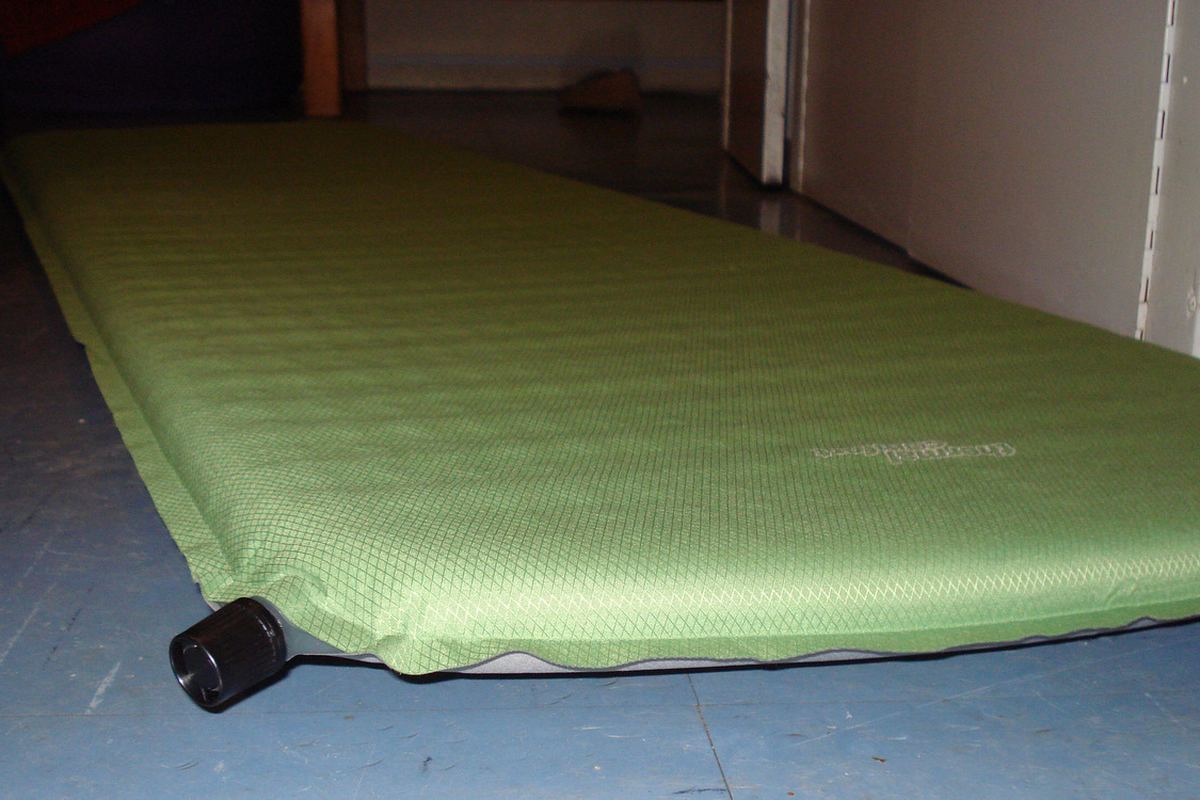
- Self-inflating foam/air hybrids: popular for car camping. Open the valve, wait, then top off. Heavier and bulkier than backpacking air pads.
Stacking pads
R-values of stacked pads add approximately. Foam under an air pad is a common cold-weather system: foam for insulation and puncture protection, air pad for comfort. Check that the stack still fits your tent floor.
Thickness isn’t R-value
A thick air mattress can feel soft and still have a low R-value if it has little insulating structure. Always look for the number.
Car-camping comfort tips
- Inflate firmly enough that your hips don’t bottom out, but not so hard that you feel perched.
- Cold air inside an air pad makes you colder; some people blow warm air in (moisture risk) or use pads with reflective or insulated cores.
- Put a sheet or thin blanket on top for comfort and to keep grit off the pad surface.
Matching pad to bag
Pick the pad for the ground temperature you’ll meet, then pick the bag for the air temperature. Guide: matching bags and pads and temperature ratings.
Care
Wipe grit off; grit abrades coatings. Store air pads with the valve open (unless the maker says otherwise) so foam and seals aren’t under constant pressure. Patch kits go in the same pack as the pad.
FAQ
Do women’s pads have different R-values?
Some brands add foam or shape differences; the R-value is still the number that matters. Choose by R-value and fit.
Can I sleep on a yoga mat?
Yoga mats are thin and usually have low insulation. Fine for a warm garage overnight; poor for real camping on cool ground.
Compare R-values, thickness, weight and packed size on Sleep and Compare. Spec-compared, not field-tested.
Reading a pad listing
A complete pad listing tells you:
- R-value and whether it’s tested to ASTM F3340
- Thickness when inflated
- Length and width (and whether there’s a wide or long version)
- Weight and packed size
- Valve type (a one-way inflation valve and a separate deflate valve make life easier)
You can filter by R-value, thickness and weight on our sleep page.
Width matters more than you think
Standard pads around 20 inches wide leave arms hanging off for many adults, especially side sleepers and broad-shouldered people. When your elbow drops onto the cold tent floor, you lose heat and comfort. For car camping, a 25-inch-wide pad is often worth the space. Check that two wide pads still fit your tent floor (tent capacity guide).
Puncture prevention
- Clear the tent site of thorns and sharp sticks.
- Use a footprint under the tent.
- Keep pets’ claws off air pads.
- Put a thin foam pad under an air pad on rough ground.
- Carry the patch kit that came with the pad and know how to find a leak (listen, feel for air, or use soapy water at home).
Inflation tips
Many modern pads come with a pump sack, which pushes air in without the moisture of your breath. Moist breath inside a pad can lead to mold growth over time, and some makers recommend using the pump sack for that reason. Follow the brand’s guidance.
In the evening, air inside the pad cools and contracts, so the pad can feel softer after an hour. Top it off before sleeping.
Noise and comfort
Some insulated air pads use reflective layers that crinkle when you move. If you’re a light sleeper or share a tent, check product descriptions for notes on noise, and consider pads with different insulation designs.
Common mistakes
- Buying a thick pad with no published R-value for cold-weather trips.
- Using an air mattress (the kind for guest rooms) in a cold-season tent. Many have very little insulation, and the large volume of air chills overnight.
- Forgetting a repair kit.
- Storing an air pad tightly rolled for months.
Bottom line
Pick R-value by season, pick width and thickness by comfort, and keep a foam pad as a cheap, reliable backup for cold or rough ground.
Checking for leaks at home
If an inflatable pad loses air overnight, inflate it at home and listen for hissing, or submerge sections in a bathtub and look for bubbles. Mark the leak and patch it according to the maker’s instructions.
Pad width and length for car camping
For car camping, weight hardly matters, so a wider and longer pad is often the most comfortable choice. Check that two pads fit side by side on your tent floor before you buy. See choosing a tent by capacity.
Filter sleeping bags & pads by spec → Compare up to 3 →
Related guides
- How to Match a Sleeping Bag and Pad for Cold Nights
- Sleeping Bag Temperature Ratings Explained
- First Car-Camping Trip Checklist
- How to Layer Clothing for Camping
- Cold-Weather Car Camping
General guidance from CampTier, based on manufacturer instructions and common outdoor practice. We don’t claim hands-on testing. Always follow your gear maker’s care and safety instructions. See our safety notes.