
Pitching a tent on snow: platforms, anchors and condensation
How to set up a tent on snow: stamping a firm platform, anchoring with snow stakes and deadman anchors, managing wind and drifting, and keeping frost and condensation under control.
By the CampTier team · Updated 2026-10-15 · About 5 min read
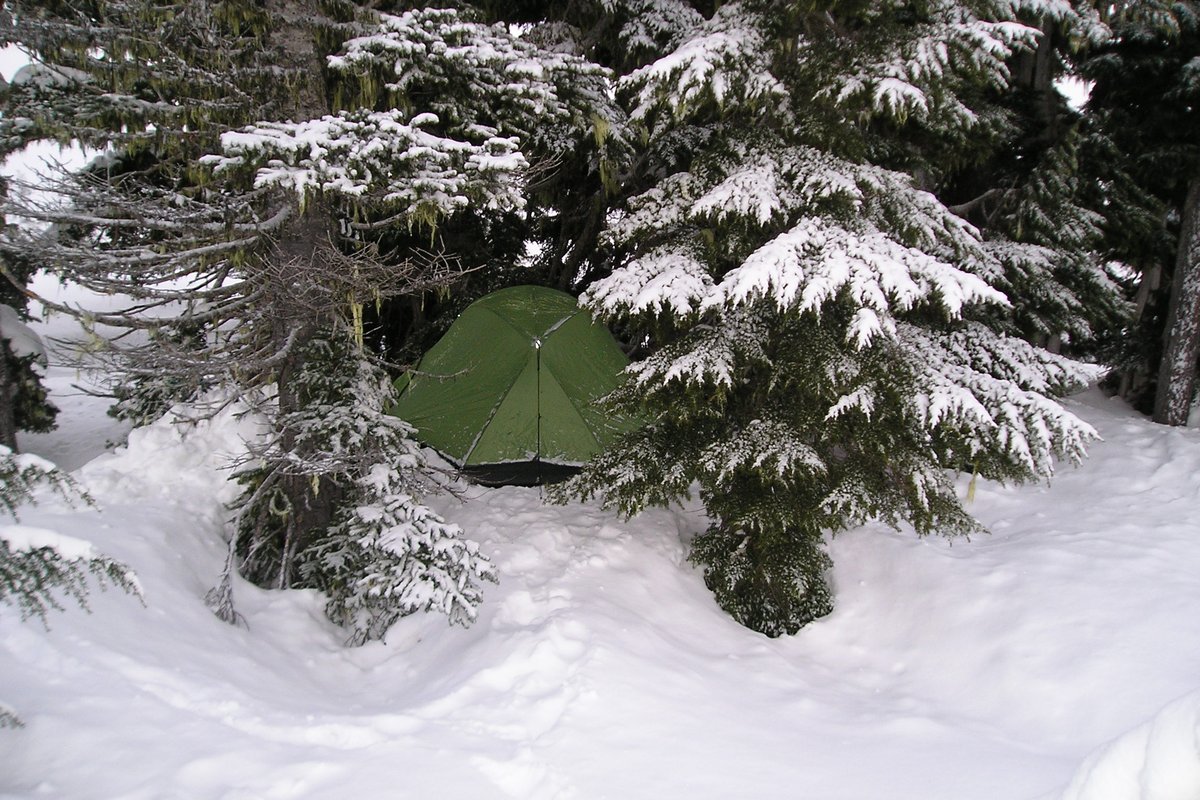
Snow changes every step of the pitch
On dirt, you pick a flat spot and push in stakes. On snow, you build the flat spot, the ground can soften or collapse under you overnight, regular stakes pull straight out, and the inside of the tent can coat itself in frost. None of this is hard once you know the sequence, but it takes longer than a summer pitch. Plan to arrive with at least an hour of daylight for setup, and practice once in a backyard or a park before a real winter trip. Choosing a tent built for snow load and wind is covered in tent season ratings.
Choosing the spot
Look for a site that is:
- Sheltered from wind by trees or terrain, but not under dead branches or overhanging snow-loaded limbs that can drop.
- Away from avalanche paths. Avoid camping at the bottom of steep, open slopes or in gullies where snow can run. If you are traveling in avalanche terrain, that requires training and a current avalanche forecast beyond the scope of this guide.
- Not in a hollow where cold air pools overnight, and not on top of a frozen lake or stream unless you know the ice conditions.
- Close to running water if possible, so you melt less snow, though melting is often the main water source in winter.
Building a platform
Snow is uneven and soft. Stamp out a platform larger than the tent footprint, leaving room around the edges for walking and staking:
- Walk the area in snowshoes or skis, then in boots, overlapping your steps.
- Let it sit 15 to 30 minutes. Disturbed snow sets up and hardens as it settles, a process called sintering.
- Smooth and level it. A shovel helps; a slight head-high slope is fine, side slopes are not.
- Check for soft spots by kneeling. Fix them now, because a knee or hip punching through at 2 a.m. is miserable.
A packed platform keeps the floor flat and makes the pad work better. Bring the lightweight avalanche or snow shovel if you have one; it also helps build wind walls.
Anchoring in snow
Standard thin stakes rarely hold in soft snow. Options include:
- Snow stakes: wide, often U- or T-shaped stakes that grip more surface area. Push them in at an angle away from the tent and stamp the snow around them.
- Deadman anchors: tie the guyline around a buried object such as a stuff sack filled with snow, a stick, a ski or a trekking pole laid horizontally in a trench perpendicular to the line. Bury it, stamp it down and let it set. Deadmen hold very well once the snow sinters.
- Skis and poles standing upright as anchors work for some points but can be needed for travel the next day.
Plan how you will get anchors out in the morning. A deadman frozen into a block of snow may need to be chopped out; using loops of cord that you can cut, or anchors you can dig, avoids losing gear. Our guide to tent stakes and guylines covers line types and tensioners that work with gloves.
Wind and drifting
- Orient the tent with its narrow, lowest end into the wind.
- Use every guyline, not just the corners.
- In open terrain, cut snow blocks and build a low wall on the windward side, a little away from the tent so drifting snow piles against the wall, not the fly.
- In heavy snowfall, get out and knock snow off the tent periodically, and clear drifts around the base so the fly can still vent.
Condensation and frost
Every breath adds moisture to the tent. In cold air, that moisture freezes on the inner wall and can snow down on you when the wind shakes the tent. To reduce it:
- Open vents and crack doors even in cold weather; a slightly colder tent is often a drier tent.
- Do not cook in the tent. Besides the carbon monoxide danger, steam adds a lot of moisture.
- Knock off frost with a small cloth or brush before it melts in the morning.
- Store wet clothing in the vestibule rather than inside the inner tent.
See tent ventilation and condensation for the general principles.
Vestibules and entryways
Dig a pit in the vestibule floor so you can sit on the edge of the tent with your feet lower, like a bench. It makes boots easier to put on and stops snow being tracked inside. Keep a small brush or whisk broom to sweep snow off clothes before you enter.
Sleeping warm on snow
Snow pulls heat from below constantly. Use a closed-cell foam pad under an insulated air pad, see sleeping pad R-values. Keep tomorrow's water bottle, phone and batteries in the sleeping bag. More cold-night tactics are in cold weather car camping.
Checklist
- Arrive with daylight to spare and a shovel.
- Stamp a platform and let it set before pitching.
- Use snow stakes or deadman anchors, and plan how to remove them.
- Orient into the wind and build a wall if exposed.
- Vent for condensation and never cook inside.
- Double up pad insulation.
Taking down in the cold
Tents packed wet in winter freeze into stiff, crinkly bundles. Shake off as much frost and snow as possible before packing. If it is a multi-day trip, stuff the tent loosely in the outer pack pocket rather than deep inside, so it is easier to air out at the next camp. At home, set it up indoors or hang it until fully dry before storage, as covered in drying and airing gear after rain.
Gloves and dexterity
Fiddly buckles and thin guylines are hard to manage in mittens. Pre-tie loops on guylines, add pull tabs to zippers and practice your setup with gloves on. A thin liner glove under a mitten lets you work small tasks briefly without exposing bare skin; see glove and mitten layering.
Rising temperatures
A warm afternoon can soften a platform you stamped in the morning. Snow anchors that froze solid at night can loosen in sun. Check guylines when temperatures swing and re-tension as needed. Wet spring snow is also heavier on the tent roof than dry powder.
Filter tents by spec → Compare up to 3 →
Related guides
- Tent Season Ratings: What 3-Season and 4-Season Actually Mean
- Choosing Tent Stakes and Guylines
- Tent Ventilation and Condensation: Why Tents Get Wet Inside
- Cold-Weather Car Camping
- Glove and mitten layering for cold camps
General guidance from CampTier, based on manufacturer instructions and common outdoor practice. We don’t claim hands-on testing. Always follow your gear maker’s care and safety instructions. See our safety notes.