
Choosing hydration reservoirs and water bottles for hiking and camping
How to choose between hydration reservoirs, hard bottles, insulated bottles and soft flasks for hikes and camp: capacity, materials, filter compatibility, cold-weather tricks, cleaning and drying, and a simple mix for most trips.
By the CampTier team · Updated 2026-10-15 · About 5 min read
Why your water containers matter
Most people think about how much water to carry and forget how they carry it. The container decides how often you actually drink, how easy it is to refill and treat water, how much weight sits in your pack and how much cleaning you face at home. A hydration reservoir, a couple of sturdy bottles and a soft flask each solve different problems. This guide explains the main options, how to match them to your trips and how to keep them clean. For the question of volume, start with our guide to how much water to carry on hikes.
The main options
- Hydration reservoirs (often called bladders) are flexible bags that sit in a sleeve inside your pack, with a hose and bite valve over your shoulder. Common sizes are around 1.5 to 3 liters.
- Hard plastic bottles are durable, easy to fill and easy to read at a glance. Many are labeled BPA-free.
- Single-wall metal bottles (stainless steel or lined aluminum) are tough and some single-wall steel bottles can be warmed carefully if the maker allows it.
- Insulated double-wall bottles keep drinks cold or hot for hours but weigh more for the same volume.
- Soft flasks and collapsible bottles roll up small when empty and are popular with trail runners and ultralight hikers.
- Lightweight disposable-style bottles are cheap and light, and many squeeze filters thread directly onto them. Check the threads on your filter before relying on that.
Reservoirs: strengths and trade-offs
The big advantage of a reservoir is hands-free sipping. Many hikers find they drink small amounts more often when the hose is right there, rather than waiting until a break to dig out a bottle. Reservoirs also spread weight close to your back, which some people find more comfortable.
The trade-offs are real, though:
- You cannot easily see how much is left, so it is common to run dry sooner than expected.
- Refilling a full pack means unpacking or sliding the bag out of a tight sleeve.
- Hoses and bite valves need regular cleaning, and a leak inside your pack can soak your insulation.
- In freezing weather, the hose can freeze even when the bag does not.
If your pack has a dedicated reservoir sleeve and hose port, check the maximum size it fits. Our guide to choosing a backpack covers pack features in more detail.
Bottles: strengths and trade-offs
Bottles are simple. You can see the level, refill them quickly at a tap or stream, mix drink powders without contaminating a hose and pass one to a hiking partner. Wide-mouth bottles are easier to fill from a slow trickle and easier to clean, while narrow mouths are easier to drink from on the move. Side pockets on most packs hold a bottle within reach, although some people need to practice reaching back for it without taking the pack off.
The main downsides are that you need to stop or reach to drink, and hard bottles take the same space empty as full.
A common mix
Many hikers settle on a combination rather than one container:
- A reservoir for day-long sipping on warm or long hikes
- One hard or metal bottle for drink mixes, camp use and as a backup if the reservoir leaks
- A soft flask or collapsible bottle as spare capacity for dry stretches, which weighs almost nothing when empty
For car camping, a large jug or water container at the site plus a personal bottle for each person usually works well. Our first car camping checklist includes camp water basics.
Treating water: plan the containers around your method
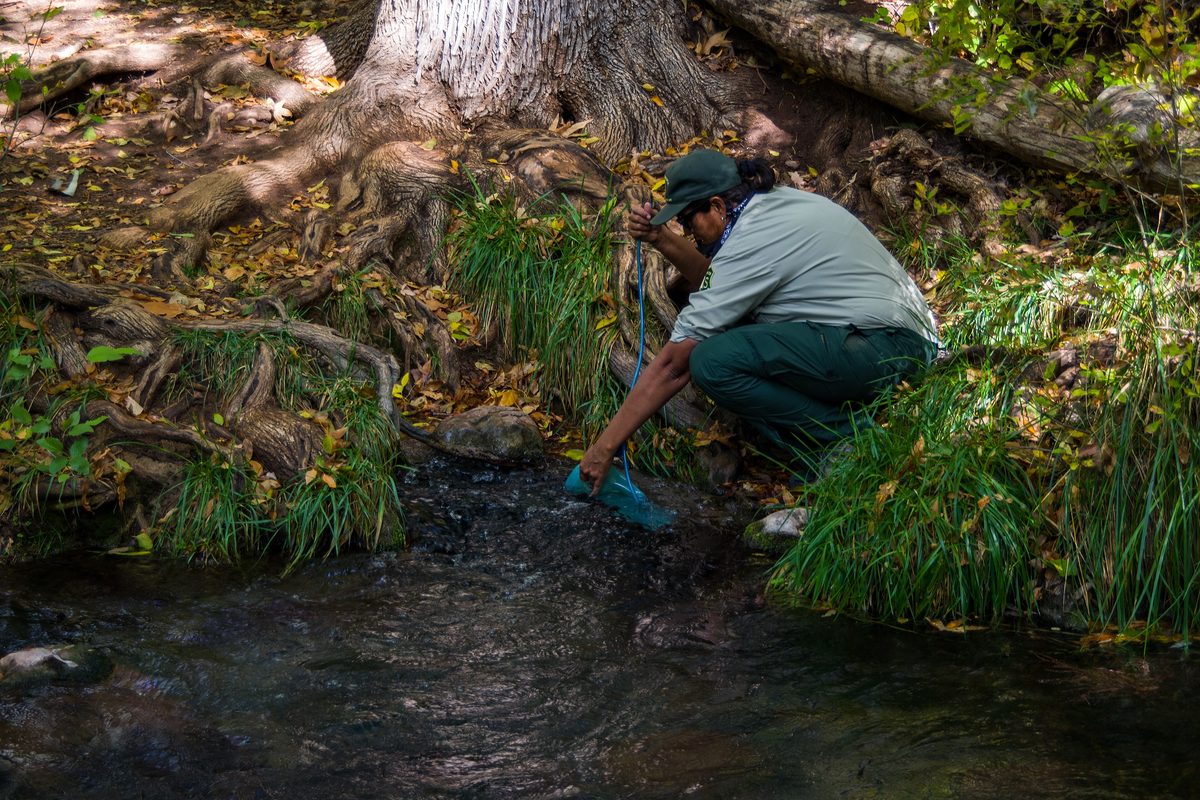
Water from streams, lakes and springs can carry germs, so plan to treat it unless it comes from a tested tap. The CDC describes boiling as the most reliable method, and filters and chemical treatments each have limits. Our guide to water filtration for camping explains the options.
Your containers should fit that plan:
- Squeeze and gravity filters often thread onto certain bottles or connect inline to a reservoir hose. Check compatibility before the trip.
- Chemical tablets and drops need a container you can measure and a wait time before drinking, so label which bottle is "treated" and which is "waiting".
- Keep dirty and clean water separate. Use a different color or a marked bottle for untreated water so nobody drinks from the wrong one, and avoid letting untreated drips run onto bite valves or bottle threads.
Cold-weather habits
In freezing conditions, water containers need a little extra care:
- Blow water back into the reservoir after each sip so the hose stays empty, or use an insulated hose and valve cover.
- Carry bottles upside down in an insulated sleeve if your bottle seals well, since ice tends to form at the top first.
- Keep a bottle inside your pack or close to your body rather than in an exposed side pocket.
- Warm drinks in an insulated bottle can be welcome at breaks. Only put hot liquids in bottles the maker says can take them, and close lids firmly.
Some campers fill a sealed bottle with warm water as a sleeping bag warmer. Check that the bottle and lid are rated for hot water, wrap it in a sock and keep it away from bare skin. Our cold-weather car camping guide has more cold-night ideas.
Cleaning and drying
Most problems with water containers come from storing them damp. A simple routine:
- Rinse after every trip, including the hose and bite valve on reservoirs.
- Wash with warm water and a little mild soap, using a bottle brush and a hose brush. Follow the maker's care instructions, since some parts are not dishwasher safe.
- Dry completely. Prop reservoirs open with a hanger, a clean whisk or a purpose-made drying frame, and hang the hose so it drains.
- Store open and dry, with caps off, in a cool place.
If you only ever fill a reservoir with plain water, cleaning is much easier. Drink mixes with sugar leave residue that encourages growth, so many people keep mixes in a separate bottle. Replace bite valves when they split or stop sealing, and replace a reservoir if it develops a leak or a smell you cannot clean out.
Weight and capacity
Water weighs about 1 kilogram per liter (roughly 2.2 pounds), so capacity is a trade-off with comfort. Carrying more containers than you fill is fine, because empty soft flasks weigh very little. Carrying a full 3-liter reservoir on a short hike with reliable taps is usually unnecessary.
Illustrative example only: a day hiker might carry a 2-liter reservoir plus a 1-liter bottle on a warm day with no refills, and only a 1-liter bottle plus a filter on a cool day with several safe refill points.
Bottom line
Choose containers around how you drink and how you treat water. A reservoir helps steady sipping, a sturdy bottle handles mixes and backups, and a soft flask adds spare capacity for dry stretches. Keep treated and untreated water separate, protect hoses from freezing and dry everything fully after each trip. For short summit trips, pair this with our guide to packing a daypack for summit side trips.
Filter backpacks by spec → Compare up to 3 →
Related guides
- Recognizing heat exhaustion and heat stroke on hikes
- How much water to carry on hikes and overnights
- Water Filtration and Treatment for Campers
- How to Choose a Backpack or Daypack for Camping
- Packing a daypack for summit side trips
General guidance from CampTier, based on manufacturer instructions and common outdoor practice. We don’t claim hands-on testing. Always follow your gear maker’s care and safety instructions. See our safety notes.