
Packing a daypack for summit side trips
What to pack in a daypack when you leave camp for a summit or lake spur—water, layers, navigation and turnaround times.
By the CampTier team · Updated 2026-10-15 · About 5 min read
Affiliate disclosure: We earn a commission from qualifying purchases made through affiliate links on this site, at no extra cost to you. Details
Why side trips catch people out
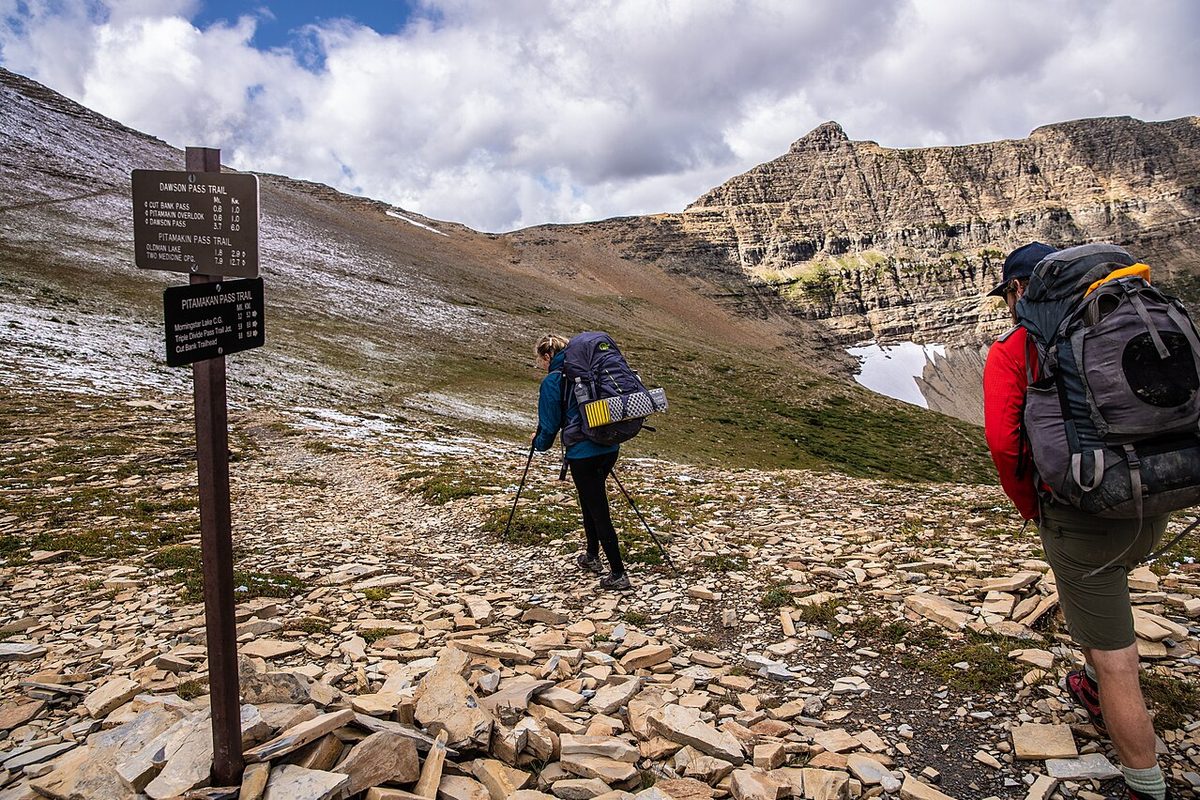
A summit spur or lake detour from camp feels like a short stroll because the hard part, carrying the big pack in, is already done. That relaxed feeling is exactly what makes side trips risky. You are often climbing higher than camp, into more exposed terrain, later in the day, with weather you have not been watching closely. The usual pattern behind side-trip trouble is not a dramatic accident. It is a group that left camp with one bottle of water, no shell and a phone at 30 percent, and then watched clouds build on the ridge.
The fix is to treat the daypack as a small, complete trip kit rather than a bag of whatever was on top of the big pack. Build it deliberately, check it against the route, and decide in advance when you will turn around.
Start from the route, not the pack
Before you pack anything, look at what the side trip actually involves. On the map, note:
- Distance and climb. A 2-mile round trip with 1,500 feet of gain is a very different outing from a flat 2-mile lakeshore loop. Our guide to reading topographic maps for day hikes explains how to read gain from contour lines.
- Exposure. Is the top above treeline, on an open ridge or on a rock dome? Open ground means wind, sun and lightning exposure with nowhere to duck out of it.
- Water on the route. Is there a reliable stream on the way, or is everything up there dry?
- Escape options. Can you drop off the ridge quickly if weather turns, or is there one way up and the same way down?
Write the planned route, expected return time and turnaround time on a scrap of paper or in your phone notes. That small step drives every packing decision that follows.
The core daypack kit
For most summit or lake side trips from a backcountry or car camp, a sensible baseline is:
- Water: at least one liter per person for a short trip, more in heat or on long climbs. If there is a water source on the route, bring a filter or treatment so you can refill. See how much water to carry on hikes.
- Food: a real snack per person plus a little extra, enough to cover an unplanned extra hour.
- Rain shell: even on a clear morning in the mountains. It doubles as a wind layer at the top.
- Warm layer: a fleece or light insulated jacket. Summits are colder than camp, and you will stop moving there.
- Navigation: map, compass and a phone with offline maps downloaded. A charged phone is useful, not a complete plan.
- Headlamp: side trips that "only take two hours" regularly finish at dusk.
- Small first-aid kit: blister care, a few bandages, any personal medications.
- Sun protection: sunglasses, sunscreen and a hat, since high, open ground increases exposure. See sun protection for campers and hikers.
- Emergency extras: a whistle and a lightweight emergency blanket or bivy.
None of this is heavy. A full kit typically fits in a small daypack or a summit pack that came with your backpacking pack.
Choosing the pack itself
A floppy stuff sack on your back works for a 20-minute walk to a viewpoint, but anything longer deserves a pack with shoulder straps that fit and, ideally, a hip belt or sternum strap. Water is the heaviest item, and a belt keeps it from swinging. Some backpacking packs have removable lids that convert into small hip or shoulder packs; others come with a separate ultralight daypack. If you are buying, our guide to choosing a backpack covers fit, and a frameless 15 to 25 liter pack is usually plenty for side trips.
Pack the shell and warm layer where you can reach them without unloading everything, and keep the map, snacks and sunscreen in a hip pocket or lid pocket so you do not stop the group every 20 minutes.
Turnaround times are part of the kit
A turnaround time is the clock time at which you turn back regardless of where you are. Set it before you leave camp, based on daylight and the weather pattern, and agree on it as a group. Common reasons to set an early turnaround:
- Afternoon thunderstorms are common in many mountain ranges in summer. Plan to be off exposed high points before they build. See thunderstorm and lightning safety at camp.
- Short days in spring and fall leave less margin for a slow descent.
- Tired legs after a day of carrying a full pack make descents slower than you expect.
The summit will be there next year. Turning around on time is a skill, not a failure.
Splitting the group
Side trips often split a group: some people want the summit, others want a nap by the lake. That is fine if you plan it.
- Leave a note at camp, or tell the people staying behind, with the route and expected return time.
- Make sure the summit group has its own map, navigation and first aid, not the only set in camp.
- Agree what happens if the summit group is late: when to start worrying, and when and how to get help.
- Do not leave a single person alone at camp if they are uncomfortable with it, or send one person up alone without agreement.
Adjusting by season
Summer: more water, electrolytes if you use them, sun protection, and an earlier start to avoid afternoon storms and heat.
Shoulder season: more insulation, a hat and gloves, and honest daylight math. Snow patches on north-facing slopes can stay icy all day; traction devices may be needed. See the shoulder season camping checklist.
Wet weather: waterproof the map and phone, pack the warm layer in a dry bag, and consider skipping exposed scrambles where wet rock is slippery.
Food that survives the pocket
Choose snacks that do not melt or crush: nuts, jerky, hard cheese, tortillas with nut butter, dried fruit, firm bars. Chocolate can turn to soup in a hot hip pocket. If the group is sharing food, decide before leaving who carries what, so the summit team is not relying on snacks that stayed in camp.
Quick pre-departure check
Before leaving camp, run through:
- Water bottles full, treatment packed if refilling
- Snacks per person plus extra
- Shell and warm layer in the pack
- Map, compass and phone with offline maps
- Headlamp and small first-aid kit
- Sun protection
- Turnaround time agreed and route note left at camp
- Camp secured: food stored properly, tent zipped, stove off
Bottom line
A summit side trip is a real hike, often into harsher terrain than camp. Pack a small, complete kit, set a turnaround time, and leave a plan behind. That way the side trip stays the highlight of the weekend instead of the story you tell about what went wrong.
Filter backpacks by spec → Compare up to 3 →
Related guides
- Carrying and using bear spray on hikes and at camp
- Choosing hydration reservoirs and water bottles for hiking and camping
- What to do if you get lost hiking: prevention, staying put and getting found
- Crossing streams safely on hikes: when to cross, how to cross, and when to turn back
- How much water to carry on hikes and overnights
General guidance from CampTier, based on manufacturer instructions and common outdoor practice. We don’t claim hands-on testing. Always follow your gear maker’s care and safety instructions. See our safety notes.