
Solar Charging at Camp: A Practical Guide
How portable solar panels work at a campsite, why real output is lower than the label, how to pair panels with power banks, and how to aim, shade-proof and protect them.
By the CampTier team · Updated 2026-10-15 · About 4 min read
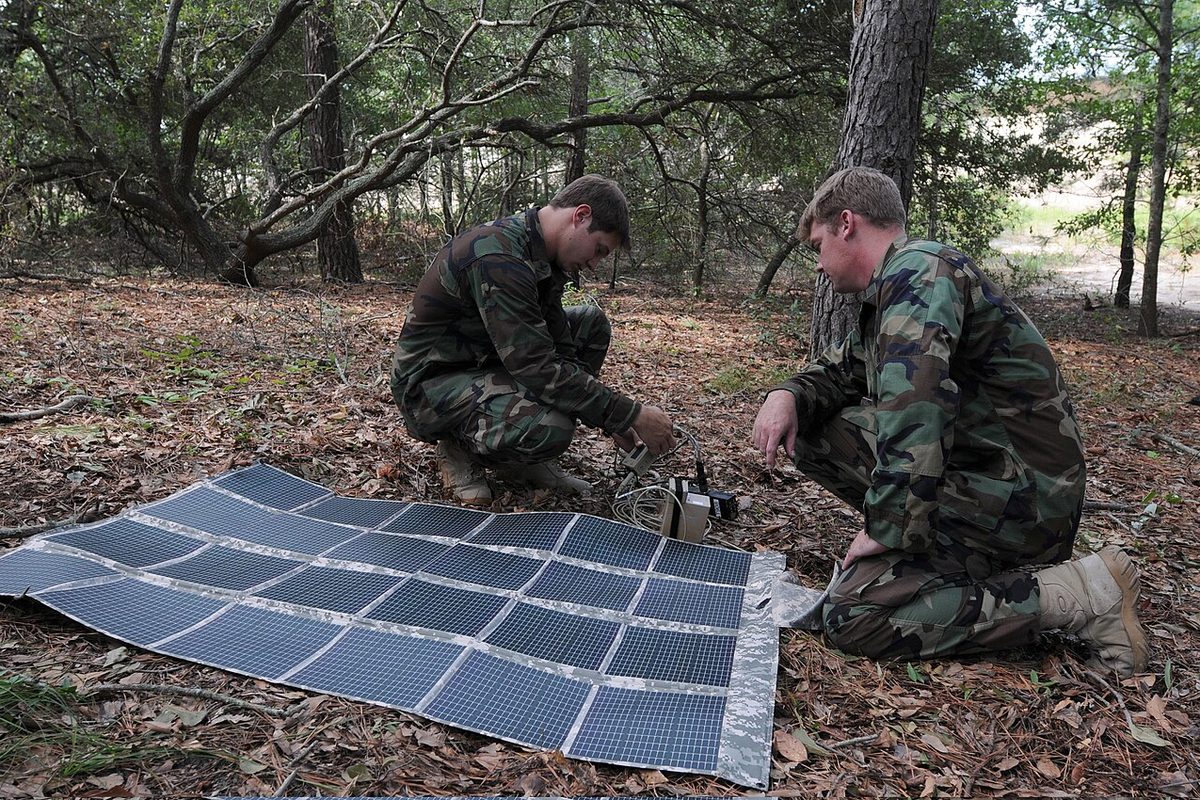
Is solar worth it for camping?
Portable solar panels can keep phones, headlamps, lanterns and power banks topped up on longer trips without a car or an outlet. On a sunny multi-day trip they can be very useful. On a shaded campsite, or a cloudy weekend, they may produce far less than you hope. Solar works best as part of a power plan, not as the whole plan. This guide explains how camp solar works in plain terms and how to get the most from it. For the bigger picture on batteries and power banks, see our batteries and charging guide.
How portable solar works, briefly
A solar panel turns sunlight into electricity. Portable camping panels usually fold or roll up and have one or more output ports, often USB, and sometimes a DC output for larger power stations. The amount of power depends on:
- Sun strength: Midday summer sun on a clear day gives far more than morning, evening, winter or cloudy light.
- Angle: Panels produce most when they face the sun directly.
- Shade: Even partial shade on part of a panel can cut output sharply.
- Heat: Many panels lose some efficiency when very hot.
- Panel size and quality.
Why output is lower than the label
Panels are rated under standard laboratory test conditions. Real-world output at a campsite is almost always lower because of angle, shade, clouds, heat, haze and conversion losses in cables and batteries. Manufacturers often note this in their specifications. Treat the rated watts as a ceiling, not an expectation, and plan as if you will get noticeably less.
Charge a power bank, then charge devices
Many campers get better results by charging a power bank with the panel during the day and then charging phones and lights from the power bank at night. Reasons:
- Sun comes and goes. Some phones stop or restart charging when input drops, which can be inefficient.
- A power bank stores energy while you are away from camp or hiking.
- You charge devices when you need them, including after dark.
Check that your power bank supports solar or variable input; some manufacturers specifically list compatibility. Our batteries guide covers capacity.
Panels and portable power stations
Larger panels are often paired with portable power stations, which are big batteries with multiple outlets. These are more common for car camping, vans and base camps. Check that the panel's connector, voltage and power match what the power station accepts, using both manufacturers' specifications. Never improvise adapters on high-power systems.
Setting up for the best output
- Find open sky. A campsite in deep forest shade may not be suitable for solar. Look for a clearing, a beach, or the edge of a meadow, where allowed.
- Aim at the sun. Tilt the panel toward the sun and turn it as the sun moves. Re-aiming a few times a day helps.
- Avoid partial shade. Watch for shadows from branches, the tent or people.
- Keep it cool. Allow airflow behind the panel. Avoid laying it on hot dark surfaces.
- Keep the battery or device shaded. Batteries and phones should not sit in direct sun. Use a longer cable so the device sits in shade while the panel sits in sun.
- Secure it. Wind can flip a panel. Use the panel's grommets or loops, and avoid tying it to anything that could break.
On the move
Some backpackers strap a small panel to the outside of a pack. Output while walking is usually limited because the angle and shade change constantly. It can help on long, open trails; in forests it may do little. Many hikers instead leave the panel set up at camp or during long breaks.
Weather and durability
- Check the panel's water resistance. Some are splash-resistant; few are designed for submersion. Port covers may need to be closed in rain.
- Keep connections dry and off wet ground.
- Fold panels only along their intended folds, and do not stand or sit on them.
- Bring panels in at night or in storms to prevent damage.
- Keep them clean: dust and pollen reduce output. Wipe gently with a soft damp cloth, following the manufacturer's care instructions.
Safety notes
- Follow manufacturer instructions for all panels, batteries and power stations.
- Do not charge damaged, swollen or overheated batteries. Stop if a device gets unusually hot.
- Keep batteries and devices out of direct sun and away from heat sources, including campfires and stoves.
- Do not leave lithium batteries in a closed, hot car for long periods.
- Keep cables clear of walkways to prevent trips.
Making less power go further
Solar works best when your devices need less:
- Put phones in airplane or low-power mode when you do not need signal.
- Turn screen brightness down.
- Use headlamps and lanterns on lower settings when possible. Our headlamp guide and lantern guide explain brightness modes.
- Download maps before the trip so you do not burn power searching for signal.
- Carry spare batteries for anything that uses standard cells.
Our campsite lighting plan shows how to light camp without running everything at full brightness.
Cold weather
Cold weather reduces battery performance, and winter sun is weaker and lower in the sky. Keep power banks and phones warm, such as inside a jacket or sleeping bag. Do not rely on solar alone in winter.
A simple solar plan for a weekend
- Charge everything fully at home.
- Bring one power bank sized for your devices.
- Bring a panel if your site has open sun and the trip is long enough to matter.
- Charge the power bank from the panel during the day, in sun, with the bank in shade.
- Charge devices from the bank at night.
- Keep spare batteries for headlamps.
Bottom line
Solar is a helpful supplement on sunny trips, not a guarantee. Plan for less output than the label, charge a power bank rather than devices directly, aim the panel and avoid shade. Most importantly, reduce how much power you need.
Filter lighting by spec → Compare up to 3 →
Related guides
- Camp Batteries and Charging: Keep Your Lights Running
- How to Choose a Headlamp for Camping
- How to Choose a Camping Lantern
- Campsite Lighting: A Simple Plan for Safe, Comfortable Nights
- Weekend Backpacking Packing List
General guidance from CampTier, based on manufacturer instructions and common outdoor practice. We don’t claim hands-on testing. Always follow your gear maker’s care and safety instructions. See our safety notes.