
Camp Batteries and Charging: Keep Your Lights Running
Alkaline, lithium and rechargeable batteries, power banks, solar panels and car charging explained for campers who want their lights to last the whole trip.
By the CampTier team · Updated 2026-10-15 · About 5 min read
Why power planning matters
Modern camping lights are efficient, but every light, phone and speaker runs on a battery that will eventually run out. A little planning keeps you from cooking dinner by phone screen on the last night. The basic idea: know what each device runs on, estimate how much you will use it, and bring a backup.
Disposable batteries
Alkaline AA and AAA cells are cheap and available almost everywhere. They have a nominal voltage of 1.5 volts, keep well on the shelf and work fine in mild weather. Their capacity drops noticeably in cold weather, and old cells can leak and corrode battery contacts, especially if left in a device for months.
Lithium primary AA and AAA cells (non-rechargeable) are also 1.5 volts but lighter, and they generally perform better in cold weather and in high-drain devices. They cost more. Most devices that take alkaline cells also accept them, but check the manual: some lights warn against certain battery types.
Rechargeable batteries
NiMH rechargeable AA and AAA cells have a nominal voltage of 1.2 volts. Low self-discharge types hold their charge for months when stored, which makes them practical for camping. Many headlamps and lanterns work well with them, though some lights show a lower battery level or run slightly dimmer because of the lower voltage. Some devices have a setting for NiMH cells.
Built-in lithium-ion batteries are common in rechargeable headlamps, lanterns, phones and power banks. They are light and hold a lot of energy. A few rules of thumb:
- Many makers say not to charge lithium-ion batteries below freezing. Check your device’s charging temperature range.
- Cold temporarily reduces available capacity. Keeping devices warm (in a pocket during the day and in your sleeping bag at night) helps.
- For long-term storage, a partial charge in a cool, dry place is usually recommended over full or empty; follow the maker’s guidance.
Power banks
A power bank lets you recharge lights and phones away from an outlet. Its capacity is usually shown in milliamp-hours (mAh) at the internal cell voltage, typically 3.6 or 3.7 volts. Watt-hours (Wh) are a more useful comparison: Wh = mAh × volts ÷ 1,000. Because charging a device involves converting voltage and some energy is lost as heat, you get noticeably less usable energy than the label suggests.
To size a power bank, add up what you need to charge over the trip: a headlamp might need one recharge, a lantern one or two, a phone one per day if you use it for photos and maps. Then add a margin.
If you fly to your trip, check the airline rules. In the United States, FAA guidance generally allows lithium-ion batteries up to 100 Wh in carry-on bags, larger ones up to 160 Wh only with airline approval, and does not allow spare lithium batteries and power banks in checked bags.
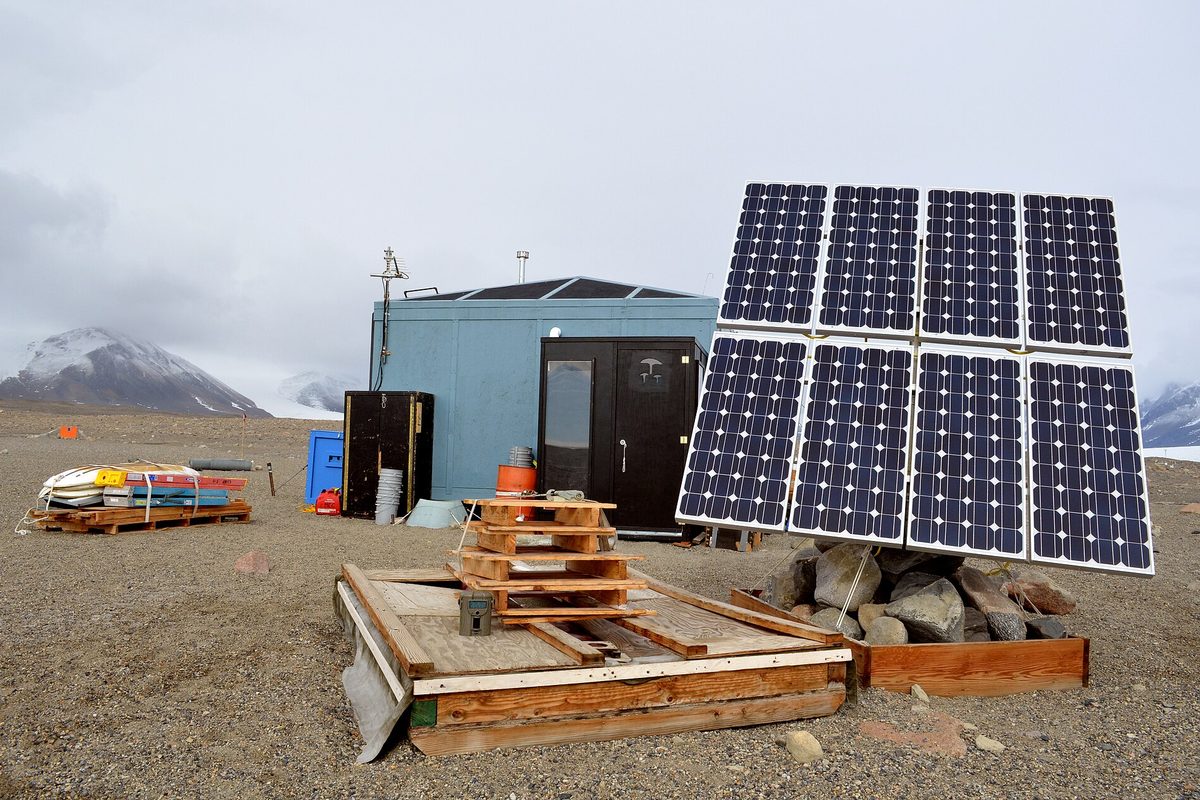
Solar panels
Portable solar panels can recharge a power bank over a sunny day. A few realities:
- Output depends heavily on sun angle, clouds and shade. Partial shade on a panel can cut output sharply.
- Point the panel toward the sun and adjust it through the day.
- Many campers charge a power bank from the panel during the day, then charge phones and lights from the power bank at night. This tends to work better than charging a phone directly from a panel in changing light.
- Small panels are best seen as a way to stretch a trip, not as a guaranteed power supply.
Charging from the car
Car USB ports and 12-volt outlets are convenient while driving. Running accessories with the engine off can drain the starting battery, and some outlets switch off with the ignition. Idling the engine at a campground is often discouraged or restricted by quiet-hour rules, and engines must never run in an enclosed space because of carbon monoxide. The simplest approach: charge everything on the drive in, and use power banks at camp.
A simple power plan for a weekend
- Charge every rechargeable light, phone and power bank fully the night before.
- Put fresh batteries in disposable-battery lights and pack a full spare set.
- Use low modes when they are enough.
- Keep batteries and power banks warm on cold nights.
- Recharge from the car on the drive, or from a solar panel on longer trips.
- Turn lights off when you are not using them, and use lockout modes in packs.
Storage and disposal
After a trip, remove disposable batteries from devices you won’t use for a while, top up rechargeable devices to a partial charge and store them in a cool place. Recycle rechargeable batteries through a battery recycling program rather than the trash. For many lithium batteries, recyclers recommend taping the terminals before drop-off to prevent short circuits. Our gear storage guide covers end-of-season care.
Matching batteries to each device
Before a trip, make a quick inventory: every light and device, what it runs on, and how you will recharge or replace it. Keeping all disposable-battery lights on the same size (for example, everything on AA or AAA) means one set of spares covers them all. Store spares in their packaging or a battery case, not loose in a pocket with keys or coins, where terminals can short.
Cold-weather tips
In cold weather, batteries deliver less power, and lights may dim or shut off early. Keep spare batteries in an inside pocket. At night, keep your headlamp, phone and power bank in your sleeping bag or in a pocket of your jacket stuffed near your feet. A cold battery often recovers some capacity when warmed up again. Lithium primary cells are a common choice for cold trips in devices that allow them.
Signs a battery needs attention
- A swollen, hot or leaking battery or power bank should not be used or charged. Stop using it and recycle it properly.
- White crust on battery contacts usually means a leaking alkaline cell. Remove the batteries and clean the contacts gently following the device maker’s advice.
- A rechargeable light that no longer holds a charge for long may have a worn battery. Check whether the maker offers a replaceable pack.
Filter lighting by spec → Compare up to 3 →
Related guides
- How to Choose a Headlamp for Camping
- How to Choose a Camping Lantern
- Campsite Lighting: A Simple Plan for Safe, Comfortable Nights
- How to Store Camping Gear Between Seasons
General guidance from CampTier, based on manufacturer instructions and common outdoor practice. We don’t claim hands-on testing. Always follow your gear maker’s care and safety instructions. See our safety notes.