
Campsite Lighting: A Simple Plan for Safe, Comfortable Nights
Where to put lights at camp, how much you need, and how to light your site without bothering neighbors or washing out the stars.
By the CampTier team · Updated 2026-10-15 · About 5 min read
Think in zones
A good lighting plan starts with what happens where at your site after dark. Most car-camping sites have four zones:
- The kitchen and table, where you cook, eat and play cards.
- The tent, where you change, read and sleep.
- Paths and edges, including guy lines, stakes, the car and the route to the restroom.
- The people, who each need a light that travels with them.
Light each zone for its job, and nothing more. You’ll use less power, trip less and keep the night sky visible.
Zone 1: the table and kitchen
A lantern hung above the table gives the most even light with the fewest shadows. Hang it from a pole, a hook or a tarp line where campground rules allow. If you cook on a stove at the end of the table, place the lantern so it lights the stove without being close enough to get hot or knocked. A warm, dimmable LED lantern is the easiest choice. Fuel-burning lanterns can work outside in the open, but keep them away from tents and anything flammable. See how to choose a camping lantern.
Zone 2: inside the tent
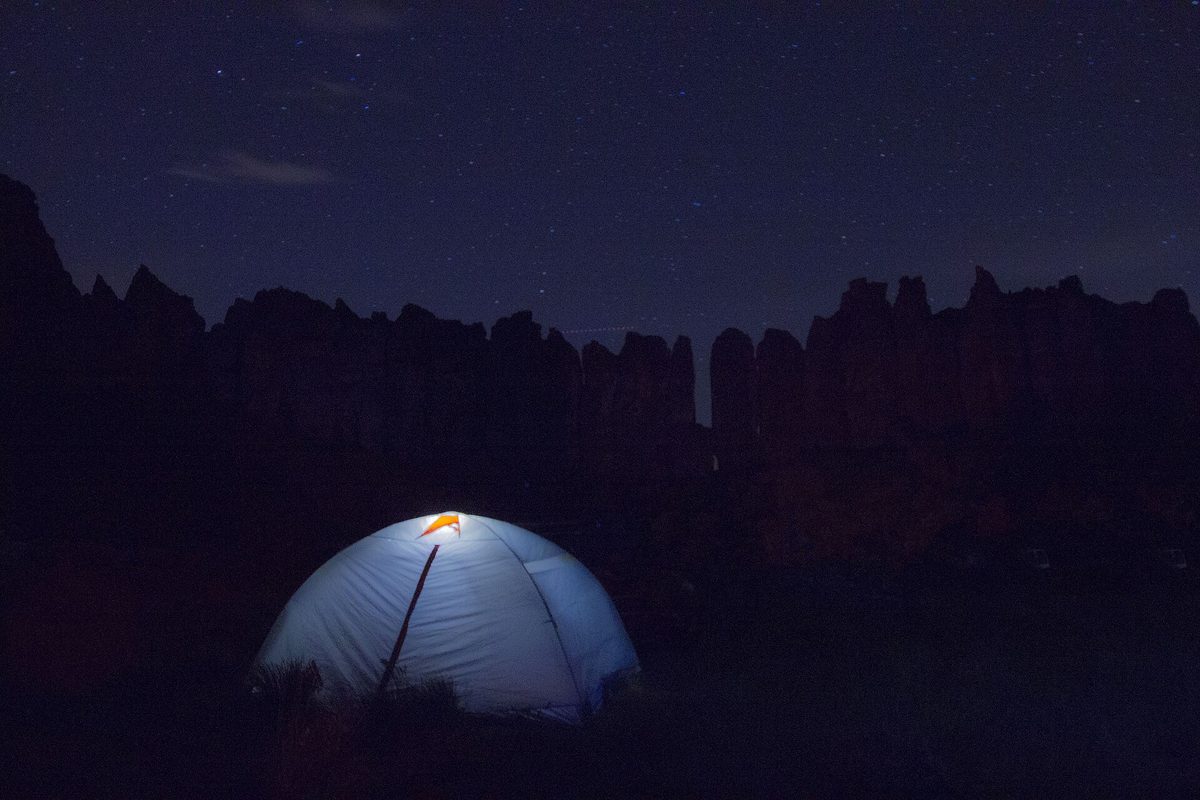
Inside a tent, a little light goes a long way. A small LED lantern hung from the ceiling loop, or a headlamp turned to low and hung upside down, lights the whole space. Keep it dim: bright light in a small space is harsh, and from outside it turns your tent into a glowing screen that shows everything happening inside. Never use candles, fuel lanterns or fuel heaters inside a tent.
Zone 3: paths, guy lines and the car
Guy lines and stakes cause many nighttime trips and falls. A few easy fixes:
- Use reflective guy lines, or add reflective tape or small clip-on lights to them.
- Place a small, low-output light near the tent door so you can find the zipper.
- Mark the path to the car and to the restroom if it crosses roots or rocks.
- Keep the area outside the tent door clear of shoes, chairs and gear.
Zone 4: personal lights
Everyone, including kids, should have their own headlamp or small light and know where it is before dark. A good habit is keeping your headlamp in the same pocket or on the same hook every night. See how to choose a headlamp.
Light etiquette at campgrounds
Campgrounds are shared spaces, and light carries a long way at night:
- Point lights down and toward your site, not toward neighbors’ tents.
- Use red or low modes when walking through the campground.
- Avoid shining headlamps into other people’s faces when you talk to them.
- Turn off area lights when you go to bed or leave the site.
- Respect quiet hours, which often include generators and bright lights.
Many parks promote night-sky viewing, and some are recognized as dark-sky places. Turning off unnecessary lights for a few minutes on a clear night is often the best part of a camping trip.
Light and wildlife
Lights don’t keep animals away from food. Raccoons, rodents and, in some areas, bears are attracted by smells, not deterred by light. Store food, coolers and scented items according to campground rules every night, whether or not your site is lit. Bright lights can also disturb nocturnal wildlife, which is another reason to keep lighting low and aimed.
Kids and the dark
A campsite at night can be exciting or scary for kids. Give each child a light they know how to use, walk the route to the restroom together before dark, and keep a dim light on in the tent if it helps them settle. Glow sticks are a fun way to mark kids at night, and they can’t be shone in anyone’s eyes.
How much power you will use
Estimate how many hours you will run each light each night, multiply by the number of nights, and compare that with the run times your lights publish for the settings you use. Bring spare batteries or a charged power bank for anything that comes up short. Running lights on low saves a lot of power. See camp batteries and charging.
Packing list for camp lighting
- One headlamp per person, with fresh or charged batteries
- One dimmable lantern for the table
- One small light for the tent
- A few small lights or reflective tape for guy lines and paths
- Spare batteries and a charged power bank
- A hook, carabiner or short cord for hanging lights
You can compare lanterns and headlamps by published specs on our lighting page.
Putting it all together
A good night at camp is well lit where you need it and dark where you don’t. Hang one warm light over the table, keep the tent dim, mark the trip hazards and give everyone a headlamp. Then turn off what you don’t need and look up.
Lighting for different trips
- Developed campground with neighbors close by: keep everything dim and aimed down. A table lantern on low and headlamps in red mode cover most needs.
- Group site or family reunion: a second table lantern and clearly marked paths help when many people are moving around.
- Walk-in or remote site: pack lighter, rely on headlamps, and bring a backup light in case one fails.
- Late arrival: set up the lantern first, then pitch the tent by its light, with headlamps for the detailed work.
Common lighting mistakes
- Leaving a bright lantern on at the table after everyone goes to bed
- Pointing a spotlight across the campground to look for something
- Not having a light within reach of the sleeping bag for nighttime trips
- Forgetting that a glowing tent is see-through from outside
A five-minute evening routine
Before dark, take five minutes to set up lighting: hang the table lantern, put a light by the tent door, check that every headlamp works, and set spare batteries where you can find them. Walk the route to the restroom once while it is still light. When everyone goes to bed, turn off the table lantern and bring it into the vestibule so it stays dry and ready for the morning.
Filter lighting by spec → Compare up to 3 →
Related guides
- How to Choose a Headlamp for Camping
- How to Choose a Camping Lantern
- Camp Batteries and Charging: Keep Your Lights Running
- How to Choose and Set Up a Campsite
- Campsite Etiquette and Leave No Trace
General guidance from CampTier, based on manufacturer instructions and common outdoor practice. We don’t claim hands-on testing. Always follow your gear maker’s care and safety instructions. See our safety notes.