
Flash flood safety for campers and hikers
How to stay safe from flash floods when camping and hiking: why floods can arrive under blue skies, reading forecasts and flash flood potential ratings, choosing campsites away from washes and creek beds, warning signs in canyons, what to do if water starts rising, crossing flooded trails and driving on flooded roads.
By the CampTier team · Updated 2026-10-15 · About 5 min read
Why flash floods catch people off guard
A flash flood is a fast, powerful rise of water, usually in a creek, wash, canyon or low-lying area. What makes flash floods so dangerous for campers and hikers is that they can arrive with very little warning, and sometimes under clear skies. A thunderstorm miles upstream can send a surge of water and debris down a dry streambed where it has not rained at all. The National Park Service notes on its Grand Canyon safety pages that hikers have been killed by flash floods generated by storms as far as 25 miles away.
Flash floods happen in many landscapes, from desert slot canyons to mountain valleys and small creeks in the woods. They are especially common where the ground cannot soak up rain quickly, such as bare rock, hard-packed desert soil or ground that is already saturated. This guide covers how to plan around flash flood risk, choose safer campsites, spot warning signs and react if water starts to rise. It is general guidance; always follow the advice of rangers and local officials where you are.
Check the forecast before you go, and keep checking
Weather is the starting point. Before any trip near canyons, washes or streams, look at the forecast for the whole area, not just the spot where you will camp. Rain falling upstream is what matters.
Look for flash flood information. The National Weather Service issues flash flood watches and warnings. A watch means conditions could produce flash flooding; a warning means flash flooding is happening or about to happen. In parts of the Southwest, the NWS also publishes flash flood potential ratings for slot canyons. Zion National Park explains these ratings as not expected, possible, probable and expected, and treats "possible," "probable" and "expected" as a serious cause for concern. Even a "not expected" rating does not guarantee safety.
Understand chance of rain. Zion's safety pages also point out a common misunderstanding: a 30 percent chance of rain does not mean a 30 percent chance it will rain on you. It describes how much of the forecast area is expected to get measurable rain.
Ask a ranger. Visitor centers and ranger stations often post current conditions and know which canyons and roads flood first. If rangers advise against entering a canyon, take their advice.
Keep checking during the trip if you have signal, and watch the sky. Conditions can change in hours, especially during summer thunderstorm season.
Choose a campsite that stays dry
Where you pitch your tent is one of the most important flash flood decisions you make. Grand Canyon National Park advises never camping in a dry wash, and if you must camp near a wash, camping as high as possible.
When choosing a site:
- Avoid dry washes, creek beds and gravel bars. Flat, sandy ground in the bottom of a wash looks inviting, but it is flat because water flows through it.
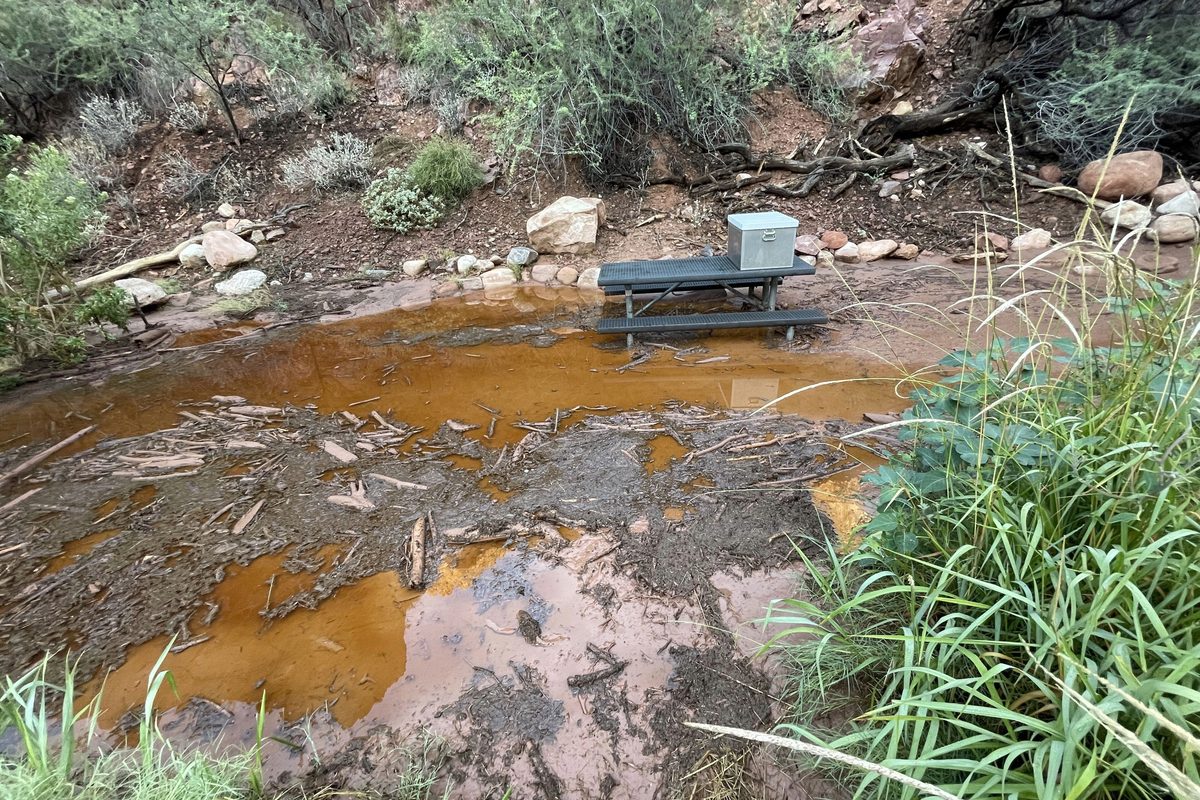
- Look for signs of past high water. Debris lines, wrack piles of sticks and grass, water stains on rock walls and mud caught in tree branches show how high water has risen before.
- Camp well above the water. A few feet of elevation can matter. Choose ground that would still be dry if the creek rose well above your head.
- Know your exit. Before dark, identify a route to higher ground that you could follow quickly at night.
Many established campgrounds are sited with flooding in mind, but stay alert in any site beside water. See our guides to checking a tent site for hazards and choosing a durable surface campsite.
Plan hikes around flood risk
Slot canyons, narrow gorges and trails that follow creek bottoms deserve extra planning:
- Study the route before you go, and note places where you could climb to higher ground. Grand Canyon's guidance suggests identifying possible escape routes on a map ahead of time.
- Start early. In many regions, summer thunderstorms build in the afternoon.
- Leave an itinerary with someone at home, including when you expect to be out. Zion's flash flood page recommends checking in with that person when you are done.
- Carry extra food, water and warm layers in case rising water blocks your route and you have to wait.
- Have a backup plan that avoids canyons and washes if the forecast turns.
Warning signs that water is coming
The National Park Service lists signs that a flash flood may be on its way. In a canyon or near a stream, watch for:
- Any worsening weather, building clouds or thunder, even in the distance
- Water suddenly changing from clear to muddy
- Floating sticks, leaves and other debris
- Rising water or stronger currents
- A growing roar of water upstream
If you notice any of these, do not wait to see what happens.
What to do if water starts rising
Speed matters more than gear. Zion's guidance is direct: do not waste time picking up gear or packing tents. Get to higher ground as quickly as possible.
- Climb immediately. Even a few feet of height can help. Move up and away from the channel, not downstream.
- Do not try to outrun a flood along a canyon floor. Go up instead.
- Stay high and be patient. It can take hours for water to drop to safe levels. Stay put until the water has clearly receded.
- Warn others downstream if you can do so safely.
- Keep your group together and account for everyone.
Never walk or drive into flood water
The National Weather Service runs its "Turn Around Don't Drown" campaign because people underestimate moving water. The NWS states that 6 inches of fast-moving flood water can knock over an adult and that about 12 inches of rushing water can carry away most cars. Flood water can also hide washed-out trail, debris and holes.
For hikers, Grand Canyon's guidance advises against crossing flowing water or flooded trails where water is above your knees. If a creek has risen, waiting is usually the safest choice. Our guide to crossing streams safely on hikes covers safer crossing habits on normal days.
Drivers should never go around barriers or drive across flooded roads, dips or low-water crossings. Roads to trailheads and campgrounds in canyon country sometimes cross washes that flood quickly. If water is flowing across the road, turn around or wait.
After a flood
Water can rise again with more rain, so stay cautious. Avoid walking through mud and debris where possible, watch for unstable banks and damaged trails, and follow any closures. Treat or filter water from creeks, which may be full of sediment. If anyone was in the water, check for injuries and signs of cold stress. Our guides to thunderstorm and lightning safety at camp and desert camping basics cover related storm and heat hazards.
Bottom line
Flash floods can arrive fast and from storms you cannot see. Check forecasts and flash flood ratings, ask rangers, camp high and away from washes, plan escape routes, watch for muddy water and debris and climb to higher ground at the first sign of rising water. Never walk or drive into flood water.
Filter tents by spec → Compare up to 3 →
Related guides
- Thunderstorm and Lightning Safety at Camp
- Checking a tent site for hazards: trees, water, slopes and wind
- Crossing streams safely on hikes: when to cross, how to cross, and when to turn back
- Desert camping basics: sand, wind, flash floods and cold nights
- Choosing a durable-surface campsite
General guidance from CampTier, based on manufacturer instructions and common outdoor practice. We don’t claim hands-on testing. Always follow your gear maker’s care and safety instructions. See our safety notes.