
Hammock Camping Basics
How hammock camping works: picking trees, tree-friendly straps, getting the hang angle right, staying warm underneath, and keeping rain and bugs off.
By the CampTier team · Updated 2026-10-15 · About 6 min read
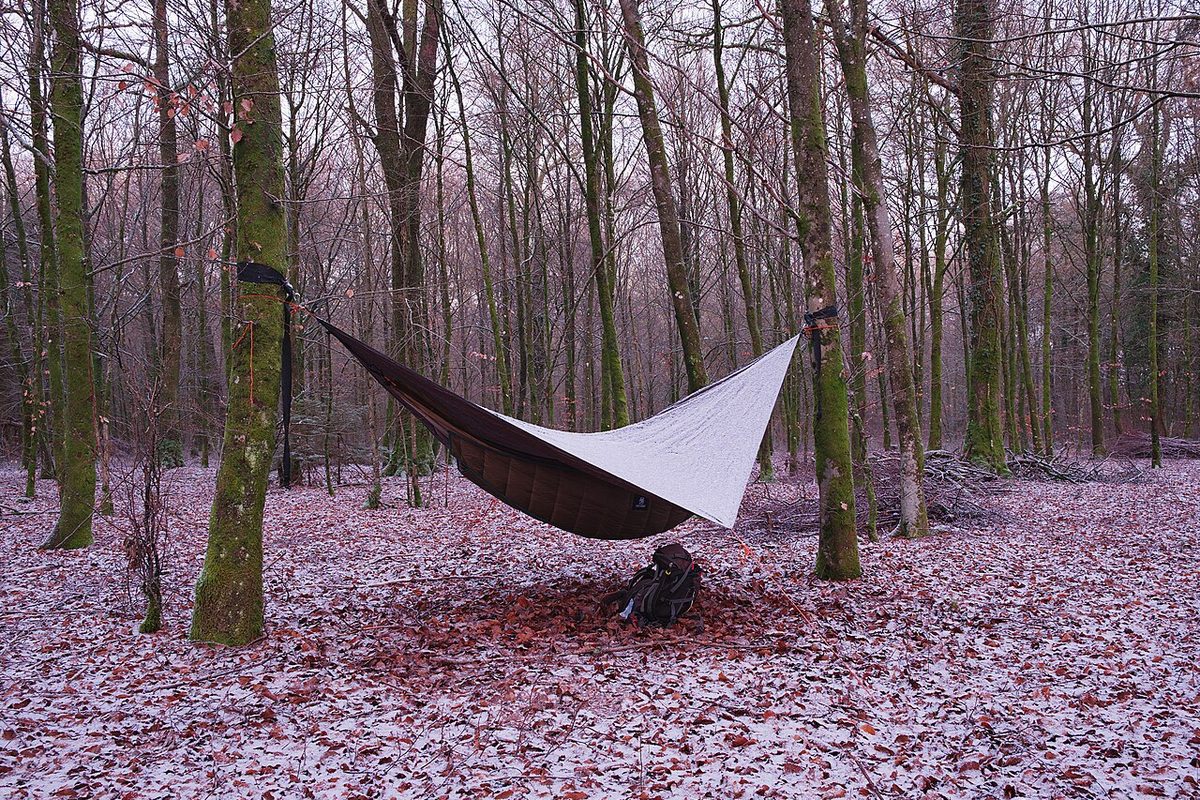
Why people sleep in hammocks
A camping hammock lifts you off the ground, so roots, rocks and slopes matter far less than they do for a tent. Many people find a well-hung hammock more comfortable than a pad on hard ground, and a hammock setup can pack small. The trade-offs are real, though: you need two suitable anchor points, you lose the easy warmth of a pad on the ground, and you need a plan for rain, wind and insects. This guide covers the parts that trip up first-time hammock campers so the first night is a good one.
Check the rules before you pack
Not every campground allows hammocks. Some parks ban hanging anything from trees in developed sites to protect bark and roots; others allow it only with wide straps; a few provide posts. Read the campground or park rules, or ask the host. In backcountry areas, land managers may have similar rules near lakes and popular sites. If hammocks are not allowed where you are going, bring a tent or a freestanding hammock stand if the site permits one.
Picking the right trees
Look for two healthy, living trees that are thick enough not to bend when you climb in. A common rule of thumb in hammock instructions is that a trunk you cannot easily wrap your hand around is too thin; many guides suggest something closer to the thickness of a dinner plate or more. Avoid dead trees, trees with dead limbs overhead (often called "widowmakers"), and anything leaning or cracked. Look up before you look down.
Spacing matters too. Most camping hammocks are designed to hang between trees roughly a few long paces apart. Your hammock's instructions will list a recommended range. Too close and you sag into a deep "U"; too far and you need long straps and the pull on the anchors goes up.
Tree-friendly straps, not rope
Thin rope or cord can cut into bark and damage the living layer underneath. Wide, flat webbing straps spread the load and are what most manufacturers and Leave No Trace guidance recommend. Wrap the strap around the trunk at roughly head height or a bit above, then connect the hammock using the attachment method that came with it (carabiners, toggles or buckles). Do not girth-hitch rough cord around trees, and never nail or screw anything into a tree.
The hang angle is the whole game
The most common beginner mistake is hanging the hammock too tight. A drum-tight hammock squeezes your shoulders, flips easily, and puts much higher force on the straps and trees. Hammock makers usually recommend that the suspension leave each tree at about a 30-degree angle from horizontal. In practice that means a visible, relaxed sag, with the low point of the hammock around chair height off the ground.
To check: stand back and look at the straps. If they look nearly flat, loosen them. If the hammock touches the ground when you sit in it, raise the strap or tighten slightly. Sit in the middle first, then swing your legs in.
Lie on the diagonal
In a gathered-end hammock, lying straight down the middle curls you into a banana shape. Lying slightly diagonal, head toward one side and feet toward the other, flattens the fabric under you. Many people also raise the foot end slightly higher than the head end so they do not slide toward the middle overnight. A small pillow or a stuff sack of clothes under the knees can relieve pressure on the joints.
Staying warm: the underside is the problem
When you lie in a hammock, your sleeping bag insulation gets crushed under your body, just like on the ground, but now there is moving air underneath instead of earth. Even on mild nights this "cold butt syndrome" surprises people. You have two main options:
- A sleeping pad inside the hammock. Simple and versatile, since you can use the same pad on the ground. It can shift around, so some hammocks have a double-layer bottom or sleeve to hold the pad. Look at the R-value guidance in our sleeping pad R-value guide.
- An underquilt. This hangs outside and below the hammock, so your weight does not compress it. Many hammock campers consider it the most comfortable choice for cool nights. It adds gear and setup, and fit varies by hammock length, so check compatibility.
On top, a regular sleeping bag works, but a top quilt is popular because it is easier to get into in a hammock. Our down vs synthetic insulation guide explains the fill choices.
Rain and wind protection
A hammock by itself has no roof. A tarp hung above it on a ridgeline keeps rain, dew and some wind off. The tarp should be long enough to extend past both ends of the hammock and wide enough to cover the sides when angled down. In rain, add a drip line to each hammock strap: a short piece of cord or a strip tied to the strap so water running down it drips off before it reaches the hammock. In wind, pitch the tarp lower and angle the windward edge closer to the ground. See setting up a camp tarp for knots and pitches that also work over a hammock.
Bugs
In mosquito season a bug net is not optional. Some hammocks have an integrated net with a zipper; others use a separate net that wraps the whole hammock. Hang the net so it does not touch your face, since mosquitoes can bite through mesh where it rests on skin.
Gear storage and getting in and out
Clip a small "ridgeline organizer" or a stuff sack to the hammock's ridgeline or suspension for a headlamp, phone and water. Leave boots under the hammock on a stuff sack or inside a bag so they stay dry and spider-free. Getting in: sit in the middle like a chair, then swing in. Getting out: sit up and put your feet down before standing. Avoid standing in the hammock; it is not designed for that.
Safety and site care
- Hang low. A hammock does not need to be high to be comfortable, and a low hang reduces fall height.
- Inspect straps, carabiners and stitching before each trip. Retire anything frayed or cracked.
- Respect the manufacturer's weight limit, and do not double up in a single hammock unless it is designed for two.
- Do not hang over water, steep drop-offs, or fragile vegetation. Pick a spot near an existing trail or site so you are not trampling new ground.
- Remove all straps and cord when you leave. Our campsite etiquette and Leave No Trace guide covers the rest.
A first-night checklist
- Hammock with suspension straps, and the instructions in your phone.
- Insulation underneath: a pad or an underquilt suited to the night's low temperature.
- Top insulation: sleeping bag or quilt.
- Tarp, ridgeline, stakes and guylines.
- Bug net if insects are active.
- A small pillow or clothes bag. See our camping pillow guide.
- A backup plan, such as a tent in the car, if you are car camping and the trees do not cooperate.
Common mistakes
- Hanging tight like a clothesline instead of with a relaxed sag
- Skipping bottom insulation on a cool night
- Using thin rope that cuts into bark
- Hanging below a dead limb
- Forgetting drip lines and waking up with a wet foot end
- Pitching the tarp too high in wind-driven rain
Bottom line
Hammock camping rewards a little practice. Hang it once in a backyard or park (where allowed), get the sag and diagonal lie right, and figure out your warmth underneath before you rely on it. Once the system is dialed in, it can be one of the most comfortable ways to sleep outside.
Filter sleeping bags & pads by spec → Compare up to 3 →
Related guides
- How to Set Up a Camp Tarp
- Sleeping Pad R-Values: How Warm Is Warm Enough
- Down or Synthetic Sleeping Bag Insulation
- Campsite Etiquette and Leave No Trace
- How to Choose a Camping Pillow
General guidance from CampTier, based on manufacturer instructions and common outdoor practice. We don’t claim hands-on testing. Always follow your gear maker’s care and safety instructions. See our safety notes.