
Caring for Base Layers and Hiking Clothes
How to wash, dry and store merino, synthetic and fleece hiking clothes and softshells so they keep wicking, stay fresh longer and last for many seasons.
By the CampTier team · Updated 2026-10-15 · About 5 min read
Why care changes performance
Hiking clothes are designed to do specific jobs: base layers move sweat away from skin, fleece traps warm air, softshells block wind and light rain, and rain shells keep water out while letting vapor escape. Body oils, sweat salts, sunscreen, campfire smoke, detergent residue and fabric softener can all reduce those abilities over time. A merino shirt that smells after one hour or a synthetic top that feels clammy instead of dry is often a care problem, not a bad garment. The good news is that caring for technical clothing is mostly about doing less: gentle washing, no softener and careful drying. Always check the care label first, because fabric blends and finishes vary. For the basics of how layers work together, see layering for camping.
Merino wool base layers
Merino is prized for warmth, comfort and odor resistance, which means you can often wear it several times between washes. Tips:
- Air it out first. After a day of hiking, hang the shirt somewhere airy overnight. Often that is enough to freshen it for another day.
- Wash cool and gentle. Most merino garments can be machine washed on a gentle or wool cycle in cool or lukewarm water with a mild or wool-specific detergent. Turn items inside out.
- Skip bleach and softener. Bleach damages wool fibers; softener coats them and reduces wicking.
- Dry flat or on a line. Heat can shrink and felt wool. Some merino blends allow tumble drying on low; if in doubt, air dry.
- Watch for moths. Store clean merino in sealed bags or containers, since clothes moths love wool, especially when it has body oils on it.
Thin merino fabrics wear faster than synthetics and may develop small holes at friction points, such as where pack straps rub. Small holes can be darned or patched early before they grow.
Synthetic base layers
Polyester and nylon base layers dry fast and are durable, but they can hold odor more than wool because body oils cling to synthetic fibers.
- Wash after each use if odor is a problem, inside out, in warm (not hot) water.
- Use a regular or sports-specific detergent, in the recommended amount; too much detergent leaves residue that traps odor.
- No fabric softener or dryer sheets. They reduce wicking and can trap smells.
- Dry on low or line dry. High heat can damage elastic fibers and some finishes.
- For stubborn odor, some people use a pre-soak with a sports detergent or a small amount of white vinegar in the rinse; test on a small area and follow the label.
Fleece and insulating layers
Fleece is easy-care but pills with friction. Wash inside out on gentle with similar items (not with towels, which shed lint), and line dry or tumble dry on low. Synthetic insulated jackets usually machine wash on gentle and tumble dry on low. Down jackets need more care, with a down-specific detergent and a long low-heat dry with clean dryer balls to restore loft; the process is similar to washing a down sleeping bag.
Softshells and rain shells
Shells often have a durable water repellent (DWR) finish that makes water bead up and roll off. Dirt and oils make the finish stop working, and the outer fabric "wets out," which makes a waterproof-breathable jacket feel clammy inside. Washing shells actually helps them perform:
- Close zippers and Velcro, empty pockets, and wash with a technical cleaner made for waterproof gear (regular detergents can leave residue).
- Rinse thoroughly.
- Many manufacturers recommend tumble drying on low or medium heat to help reactivate the DWR finish; follow your label.
- If water no longer beads after washing and drying, reapply a DWR treatment as described in re-waterproofing gear.
More on choosing and using shells is in rain gear for camping.
Hiking pants and shirts
Nylon and polyester hiking pants and sun shirts generally machine wash on cool to warm and line dry or tumble dry on low. Some have sun-protective (UPF) or insect-repellent treatments; check the label for how washing affects them. Clothing treated with permethrin, for example, typically has a limited number of washes before the treatment fades. Store treated clothing separately and follow the label.
Socks
Socks get the hardest use. Wash them inside out, skip softener and replace them when cushioning flattens or heels and toes wear thin. See hiking socks and blister prevention for sock choice and trail habits.
Washing and drying on the trail
On multi-day trips, you will want to rinse a shirt or socks:
- Carry water at least 200 feet (about 70 steps) from lakes and streams, following Leave No Trace guidance, and use only a small amount of biodegradable soap, or just water.
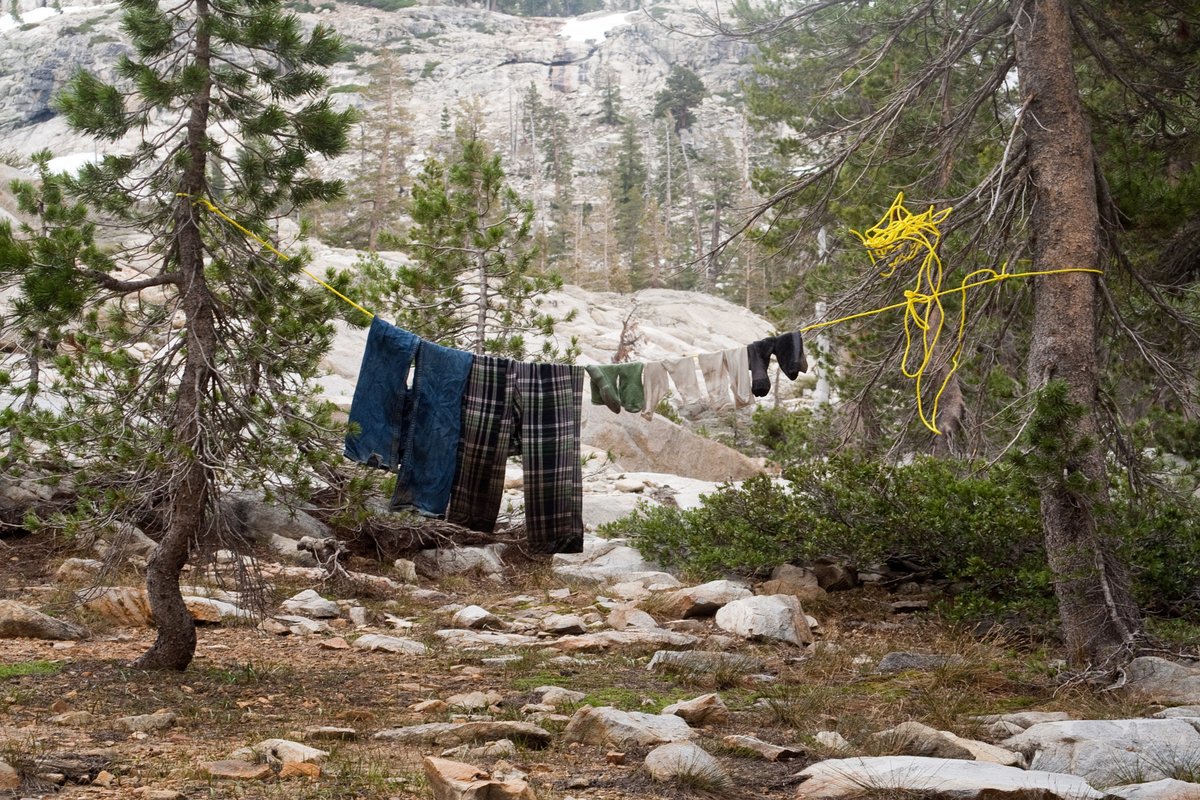
- Wring items gently and hang them on a line, pack or tree branch in the sun and breeze. A short length of cord and a few clothespins or safety pins make a simple drying line.
- Sleep with damp (not wet) socks or a base layer inside your sleeping bag liner to dry them with body heat, only if the rest of your system is warm enough.
Odor and campfire smoke
Smoke clings to fleece and synthetics. Air smoky clothes outside overnight and wash them when you get home. Keep a clean set of sleep clothes in a sealed bag that never goes near the fire, so your sleeping bag stays fresher too.
Storage between trips and seasons
Make sure everything is clean and completely dry before storage. Damp clothes in a closed bag grow mildew and odors that are hard to remove. Store hiking clothes loosely in a cool, dry, dark place. Avoid storing down and synthetic insulated jackets compressed for long periods. Use sealed containers for wool to keep moths out. Our gear storage between seasons guide covers tents, sleeping bags and boots too.
Simple repairs
Small tears in shells and puffy jackets can be patched with repair tape made for outdoor fabrics. Loose seams, broken zippers and torn pocket edges are often repairable by an outdoor gear repair shop or the manufacturer's repair service. Fixing small problems early keeps clothing in use far longer.
Bottom line
Air out wool, wash synthetics with the right amount of detergent, never use softener on technical clothing, dry gently, wash shells to keep their water repellency working and store everything clean and dry. Good care keeps hiking clothes performing like new for many seasons.
Related guides
- How to Layer Clothing for Camping
- How to Re-Waterproof a Tent and Rain Gear
- How to Store Camping Gear Between Seasons
- How to Wash a Down Sleeping Bag
- Hiking Socks and Blister Prevention
General guidance from CampTier, based on manufacturer instructions and common outdoor practice. We don’t claim hands-on testing. Always follow your gear maker’s care and safety instructions. See our safety notes.